Applying for Attendance Allowance for Grandmother: Parent and Relative Help 2026
You can apply for Attendance Allowance on behalf of a grandmother, parent, or other relative in three ways: helping them complete the form with their consent, becoming their DWP appointee if they lack capacity, or using a registered Property & Financial Affairs Lasting Power of Attorney. Which route you need depends entirely on whether they can still make and communicate decisions for themselves.
The Three Levels of Authority for Helping With a Claim
Not every family member needs formal legal authority to help with an Attendance Allowance claim. It depends on what your relative can still do for themselves.
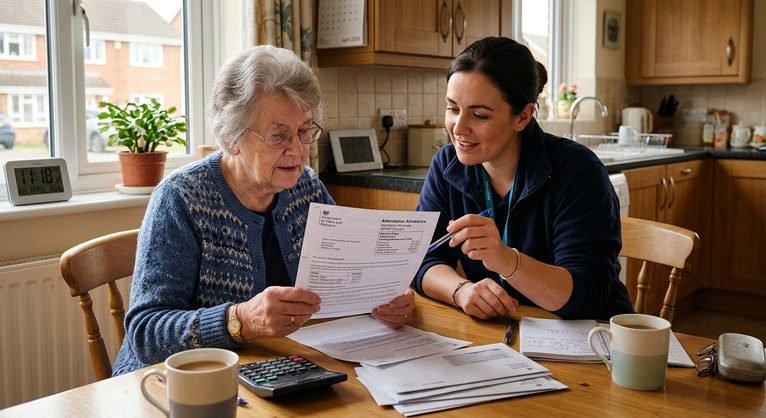
Level 1 Flavor, Calories and Recipe 2026 Helping with consent. If your grandmother can still understand the form and make her own decisions, you can sit with her, fill in the answers together, and she signs it herself. You need no legal authority at all here you’re simply a scribe and sounding board.
Level 2 DWP Appointee. If she can no longer manage her own affairs because of dementia, a stroke, or another condition affecting mental capacity someone needs to become her “appointee” so the DWP has a legally recognized person to deal with.
Level 3 Lasting Power of Attorney (LPA). If an LPA covering property and financial affairs was set up before she lost capacity, whoever holds that LPA can act on her behalf without needing separate DWP appointeeship.
The paperwork differs sharply between these levels. Level 1 uses the standard claim form, signed by your relative. Levels 2 and 3 require a paper application you cannot apply online if you’re acting as an appointee, deputy, or attorney.
Helping With Consent: When It’s Enough
This is the simplest scenario and applies to many families supporting a grandmother who is still sharp mentally but struggles physically perhaps with arthritis, poor eyesight, or fatigue that makes form-filling exhausting.
In this case:
- Sit with her and record her words as closely as possible, rather than paraphrasing what you think she means.
- She must sign the form herself. Nobody else can sign on her behalf at this level.
- Any payment goes into her own bank account, not yours.
- You have no formal authority you’re a helper, not a representative which means the DWP will still correspond directly with her.
This route works well right up until the point where she can no longer reliably understand the form’s questions or the consequences of her answers. That’s the trigger for Level 2.
Becoming a DWP Appointee: Step by Step
If your grandmother lacks the mental capacity to manage her own claim and no LPA exists, you’ll need to become her DWP appointee. Here’s how that actually works.
1. Contact the Attendance Allowance helpline on 0800 731 0122 and explain that she needs an appointee.
2. The DWP arranges a visit to assess whether an appointee is genuinely needed this isn’t a rubber stamp; a Visiting Officer will speak with her directly where possible.
3. You’re interviewed by the same officer to check you’re a suitable person to take on the role.
4. You complete Form BF56 together during that interview, giving your details and confirming your relationship to the claimant.
5. If approved, you receive Form BF57, formally confirming your appointment. You are not legally the appointee until this letter arrives don’t assume the interview alone gives you authority.
Only one person can be appointee at a time, which matters if several siblings or grandchildren all want to be involved (more on that below).
What an Appointee Is Legally Responsible For
Once approved, you take on real obligations, not just a title:
- Signing and maintaining the benefit claim on her behalf
- Reporting any change in circumstances a hospital admission, a house move, a change in care needs
- Spending the Attendance Allowance money solely in her best interests
- Keeping reasonable records of how it’s spent
If the DWP later finds the money was misused, or that an overpayment occurred, the appointee not the claimant can be held responsible. This is worth taking seriously, particularly if other family members are watching how the money is managed.
Your appointment can be withdrawn if you don’t act properly, if your grandmother regains the ability to manage her own affairs, or if you become unable to continue in the role yourself. If any of that happens, contact the DWP immediately rather than waiting.
Lasting Power of Attorney vs. Enduring Power of Attorney
If your family set up legal documents years ago, you may already have the authority you need without going through the appointee process.
Property & Financial Affairs LPA is the one that matters for benefits. If it was registered with the Office of the Public Guardian while your grandmother still had capacity, whoever holds it can apply for Attendance Allowance on her behalf no separate appointeeship needed. A Health & Welfare LPA does not cover this; it’s the wrong document for a benefits claim.
Enduring Power of Attorney (EPA) is the older version of this document, created before October 2007. If one exists, it generally still works, but it must be registered with the Office of the Public Guardian once your grandmother loses capacity an unregistered EPA can’t be used to deal with the DWP.
In either case, the DWP will want to see the original or a certified copy before accepting your authority, so track this document down early rather than assuming a claim can proceed without it.
When There’s No LPA: Court of Protection Deputyship
If your grandmother has lost capacity and no LPA was ever put in place, appointeeship (Level 2) usually covers benefits specifically and is faster and cheaper than applying to become a Court of Protection deputy. Deputyship is typically reserved for situations involving more complex financial affairs property sales, investments, or larger estates rather than a single benefit claim. If you’re only trying to sort out Attendance Allowance, appointeeship is almost always the right route, not deputyship.
Describing Someone Else’s Care Needs Accurately
Whichever route you’re using, the form still needs to reflect your grandmother’s actual needs, not a generic description of old age. A few practical points specific to applying on someone else’s behalf:
- Describe what you’ve directly observed helping her dress, prompting medication, noticing she’s unsteady at night rather than assumptions about what she “probably” needs.
- Where she can still communicate, note her own account of her needs alongside yours; DWP decision-makers weigh both.
- If needs fluctuate better on some days, worse on others describe the worst days honestly. Attendance Allowance is assessed on need, not on a good day snapshot.
- If paid carers are already involved, ask them for a short written note on her care needs. Third-party evidence from someone outside the family carries real weight.
The Emotional Side of Applying for a Relative
Filling in this form often forces a family to confront a decline they’ve been quietly managing around for months. Questions about incontinence, confusion, or falls can feel invasive to answer about your own mother or grandmother, even when you know the answers will help her claim succeed.
It’s also common for families to disagree about whether to apply at all one sibling may see the form as an admission that mum “can’t cope,” while another sees it as simply securing money she’s entitled to. Where possible, loop in other close relatives before submitting rather than after, particularly if you’ll be the one managing the money.
If your grandmother has dementia, don’t be surprised if she insists she’s “managing fine” even when evidence says otherwise. This isn’t obstruction it’s a well-documented response to cognitive decline and it’s one of the clearest signals that Level 2 or 3 authority, rather than simple consent, is now needed.
Managing the Attendance Allowance Money Properly
Once payments start, how the money is handled matters as much as how the claim was made.
- Appointeeship accounts: many appointees open a separate account for benefit money, keeping it clearly apart from personal finances.
- Third-party mandate accounts: a simpler arrangement some banks offer, allowing a nominated person to operate an existing account without full appointeeship worth asking about if your relative’s bank supports it.
- Spend it on her behalf, not your own household even legitimate shared costs (extra heating, a cleaner, mobility aids) should be documented.
- Keep receipts and a simple log. This protects you if the DWP or other family members ever ask how the money has been used.
Different Family Members, Different Roles
The legal process is the same whoever applies, but the practical dynamics shift depending on the relationship:
- Adult child applying for a parent is the most common scenario and usually the most straightforward, since adult children are often already named on LPAs.
- Grandchild applying for a grandparent is increasingly common where adult children live abroad or have their own care responsibilities grandchildren can absolutely become appointees or hold LPA if named.
- Sibling applying for a sibling often arises with early-onset conditions and follows exactly the same appointee process.
- Spouse applying for spouse is common but doesn’t automatically confer authority a spouse still needs appointeeship or LPA if their partner lacks capacity.
- Friends, neighbors, or professional carers can become appointees too, though the DWP will scrutinize the relationship more closely during the interview.
If Your Relative Refuses Help
A grandmother with full mental capacity is entitled to refuse help or decline to claim Attendance Allowance at all, however much a family disagrees with that choice. Respecting that autonomy is a legal requirement, not just good manners.
Where capacity is genuinely in question she refuses because she doesn’t understand the form, not because she’s made an informed choice a best interests decision may need to be made, ideally with input from her GP. If disagreement persists and no LPA exists, this is one of the few situations where Court of Protection involvement may become necessary, rather than just an appointeeship.
When Several Family Members Want to Help
Only one person can be the official appointee at any time joint appointeeship isn’t generally available for Attendance Allowance. If several siblings want involvement, agree in advance who will take the formal role, and consider giving the others visibility over spending decisions to avoid resentment later. Where family disputes run deep, an independent advocate or mediator can help reach agreement before DWP paperwork is even started.
Applying Under the Special Rules Without Her Knowledge
If your grandmother is nearing the end of life, special rules allow a much faster claim but the family-specific detail here matters. You can apply on her behalf without her permission, and you can sign the form for her even without appointee or LPA status, specifically for this route. The DWP will not mention “special rules” or terminal illness in any letters sent to her, so you can protect her from a diagnosis conversation she isn’t ready for if that’s the right choice for your family. You’ll still need an SR1 medical condition report from her doctor or consultant to accompany the claim.
Frequently Asked Questions
Can I apply for Attendance Allowance for my grandmother without her permission?
Only under the special rules for terminal illness. Otherwise, if she has mental capacity, she needs to consent to and sign the claim herself, or you need appointeeship or LPA if she lacks capacity.
Do I need Power of Attorney to help fill in the form?
No if your relative still has capacity and can sign the form herself, you can help without any formal authority at all.
Can Attendance Allowance be paid into my bank account instead of hers?
Only if you’re her formal appointee or hold a Property & Financial Affairs LPA that specifically permits this. Otherwise, payments go directly to her.
What if my siblings disagree about who should apply?
Only one person can hold appointeeship at a time. Agree this in advance where possible, since DWP won’t mediate family disputes for you.
Can I apply for Attendance Allowance for a grandparent with dementia?
Yes. If she lacks capacity to manage her own claim, you’ll need to become her DWP appointee, or use an existing registered LPA if one was set up before her diagnosis progressed.
What if my grandmother lives with me rather than independently?
Living arrangement doesn’t change the authority you need the same three levels apply whether she lives with you, alone, or in a care home.