Is Attendance Allowance Paid in Arrears: Payment Schedule 2026
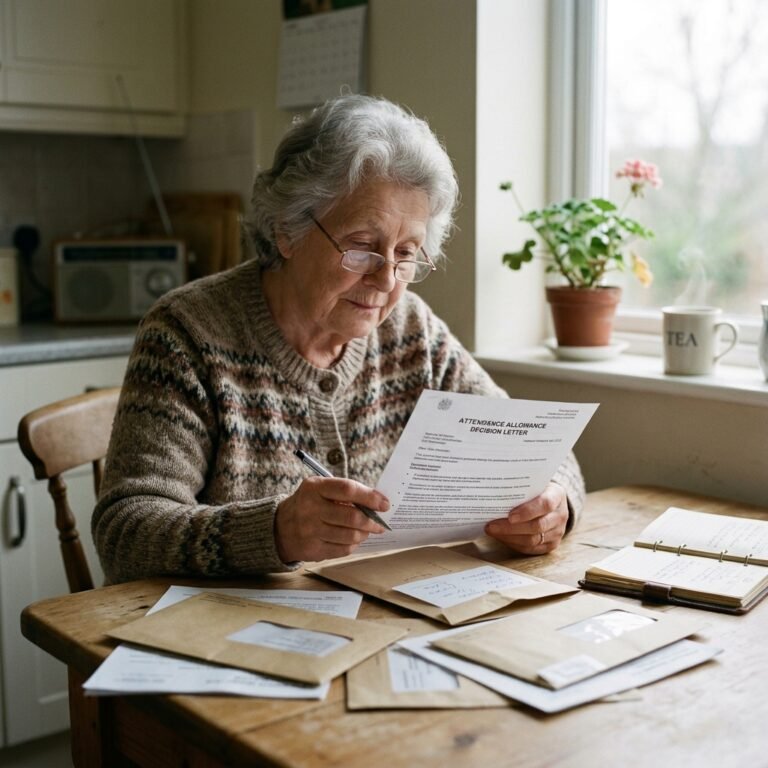
Yes. Attendance Allowance is paid four-weekly in arrears, meaning each payment covers the four weeks that have just passed rather than the four weeks ahead. This mirrors how the State Pension is paid and results in 13 payments a year instead of 12 monthly ones. Your first payment will include backdated arrears from your claim date, so it’s typically larger than every payment after it.
If you’ve just been awarded Attendance Allowance, working out exactly when your money will land can feel confusing. Unlike a salary that arrives on the same date every month, this benefit runs on a four-week cycle and pays for time already passed. Understanding that rhythm helps you budget properly and spot a genuine missed payment rather than mistaking a normal gap for an error.
What Does “Paid in Arrears” Actually Mean?
Being paid in arrears means the DWP pays you for a period after it has already happened, rather than in advance. So when your payment lands, it’s settling up for the four weeks that just ended, not the four weeks ahead of you.
This matters because it creates a natural lag between becoming eligible and seeing money in your account. If your claim starts today, you won’t receive a payment today, or even next week. You’ll wait until the end of your first four-week assessment period before the payment is processed.
The upside is that this arrears system is standard practice across most DWP benefits, including the State Pension. It’s not a delay unique to your claim, and it’s not a sign that anything has gone wrong.
When Is Attendance Allowance Paid? The 4-Weekly Cycle
Attendance Allowance isn’t paid monthly, despite what many new claimants assume. It’s paid every four weeks, which means you’ll receive 13 payments over a calendar year rather than 12.
Here’s how that breaks down by rate:
|
Frequency |
Lower Rate |
Higher Rate |
|
Weekly rate (used for calculations) |
£76.70 |
£114.60 |
|
Paid every 4 weeks |
£306.80 |
£458.40 |
|
Approximate monthly equivalent |
£332 |
£497 |
|
Annual total |
£3,988.40 |
£5,959.20 |
Because 13 payments don’t divide evenly across 12 calendar months, you’ll occasionally get two payments in the same calendar month. This isn’t a bonus or an error it’s simply how a 4-weekly cycle falls against a 12-month calendar. It’s worth marking these “double payment” months in your budget so you don’t mistake them for overpayments that need repaying later.
Attendance Allowance Payment Schedule: Your Personal Payment Day
When your claim is approved, the DWP assigns you a fixed day of the week for your payments the same principle used for the State Pension, where the last two digits of your National Insurance number determine whether you’re paid on a Monday, Tuesday, Wednesday, Thursday, or Friday. Attendance Allowance works on a similar fixed-day basis once your award starts.
That day should stay consistent every four weeks going forward. If you’re unsure which day yours falls on, check your award letter or call the Attendance Allowance helpline to confirm.
What happens if your payment day falls on a bank holiday?
When your scheduled payment date coincides with a bank holiday, the DWP typically pays you on the last working day before it, rather than delaying the payment until after the holiday. This is standard practice across most benefits, so if your usual payment day is a Monday and that Monday is a bank holiday, expect your money slightly earlier that week instead of later. It’s sensible to build a small buffer into your budgeting around Christmas, Easter, and the late-summer bank holidays, since several benefits and pension payments often shift in the same week and can bunch together.
Your First Attendance Allowance Payment
Your very first payment looks different from every payment that follows, and it’s worth knowing why so it doesn’t catch you off guard.
Because Attendance Allowance is backdated to the date your claim was received (or the date you called the helpline to register your claim, provided the form is returned within the required window), your first payment will include a lump sum covering everything owed from that start date up to your first scheduled payday. If your claim took eight weeks to process, for example, your first payment could cover two full four-week periods’ worth of arrears in one go, rather than just four weeks.
After that catch-up payment, your payments settle into the regular four-weekly rhythm and return to the standard amount for your rate.
Payment Methods and Account Types
Attendance Allowance is paid directly into a bank, building society, or credit union account. There’s no cheque option, and payments aren’t made in cash by default.
What if you don’t have a bank account?
If you’re unable to open or manage a bank account, the DWP offers the Payment Exception Service as an alternative. Instead of a bank transfer, you’re sent a payment card or a voucher code by text or email, which you can use to collect your money in cash at any PayPoint outlet or Post Office. You’ll need to bring original proof of identity a copy won’t be accepted and you must collect each payment within 90 days or it expires and has to be reissued.
Each transaction through this service is capped at £100, though you can process your card multiple times in one visit if you’re owed more. If someone else needs to collect the money on your behalf, they’ll need your card or voucher, your ID, and their own ID.
If You Can’t Manage Your Own Account
If you’re unable to manage your financial affairs because of cognitive decline, a hospital stay, or another health issue someone can apply to become your appointee. Once appointed, they receive a payment card or manage the account on your behalf and take on responsibility for reporting any change of circumstances to the DWP. This is a more formal arrangement than simply having a relative help you check your balance, and it needs to be set up directly with the department.
What Happens If a Payment Is Missed?
Before assuming a payment has gone missing, check the date against your confirmed payment schedule many “missing” payments are simply due on a different day than expected, especially around bank holidays or during the transition into a new four-week cycle.
If a payment genuinely hasn’t arrived on the expected date, contact the Attendance Allowance helpline as soon as possible. They’ll verify your bank details on file and check whether the payment was processed on their end. Keep your National Insurance number and award letter handy, as you’ll likely need both to speed up the query.
When Payments Are Suspended
Attendance Allowance isn’t always paid continuously certain circumstances trigger a suspension:
- Hospital stays: Payment continues for the first 28 days of an NHS inpatient stay. After that, it’s suspended until you’re discharged. If you have two hospital stays separated by 28 days or less, they’re linked together and count toward that same 28-day total.
- Care home admission: If your care home costs are paid, even partly, from public funds (such as local authority or NHS funding), Attendance Allowance stops 28 days after admission. If you’re a self-funder, payments continue as normal.
- Extended time abroad: Payments can continue for the first 13 weeks of a temporary absence, extending to 26 weeks if you’re abroad specifically for treatment and the DWP agrees to the longer period.
In each case, you retain what’s called an underlying entitlement, meaning payments generally restart automatically once your circumstances revert for example, when you’re discharged from hospital or return home from a stay abroad.
Changing Your Bank Account Details
If you switch banks or close an account, notify the DWP as early as possible. Payments sent to a closed account can bounce back and delay your money while the department reissues it to your new details. Give yourself a few weeks’ notice ahead of your next scheduled payment date where you can, rather than making the change right before you’re due to be paid.
Is Attendance Allowance Taxed?
No. Attendance Allowance is entirely tax-free, regardless of your other income or savings. It doesn’t need to be reported on a Self Assessment return, and it doesn’t count as income when your other means-tested benefits, like Pension Credit or Council Tax Reduction, are calculated.
Frequently Asked Questions
How often is Attendance Allowance paid?
Attendance Allowance is paid every four weeks, in arrears, resulting in 13 payments per calendar year rather than 12 monthly ones.
What day of the week will I be paid?
The DWP assigns a fixed weekly payment day when your award starts. This should remain the same day every four weeks going forward.
When will I get my first payment?
Your first payment arrives once your claim has been processed and approved, and it includes backdated arrears from your original claim date so it will typically be larger than your regular ongoing payments.
Why is my first payment larger than expected?
Because Attendance Allowance is backdated to your claim date, your first payment catches up on everything owed for the period between that date and your first scheduled payday.
What happens if my payment day falls on a bank holiday?
Payment is usually moved earlier, to the last working day before the bank holiday, rather than delayed until afterward.
Can I change how often I’m paid?
Four-weekly is the standard cycle, though in certain circumstances the DWP can arrange shorter intervals or weekly payments in advance. Contact the helpline to discuss your specific situation.
What if I don’t have a bank account?
You can use the Payment Exception Service, which lets you collect your payment in cash from a PayPoint outlet or Post Office using a card or voucher code.
What happens to my payments if I go into hospital or a care home?
Payments continue for the first 28 days. After that, they’re suspended if your care is funded from public funds, and they typically resume once you’re discharged or your circumstances change.