Attendance Allowance Osteoporosis: Eligibility, Fractures and Falls
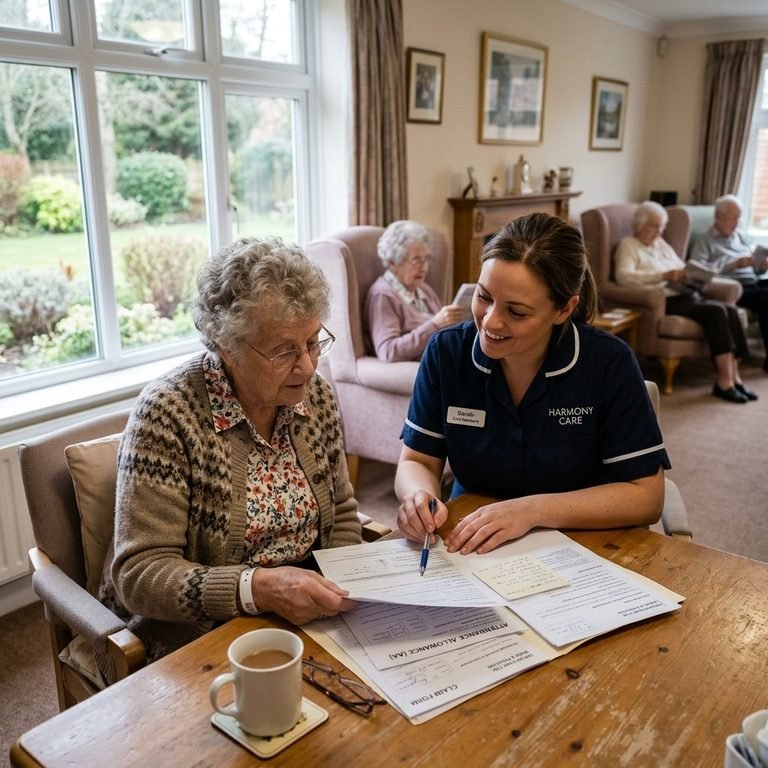
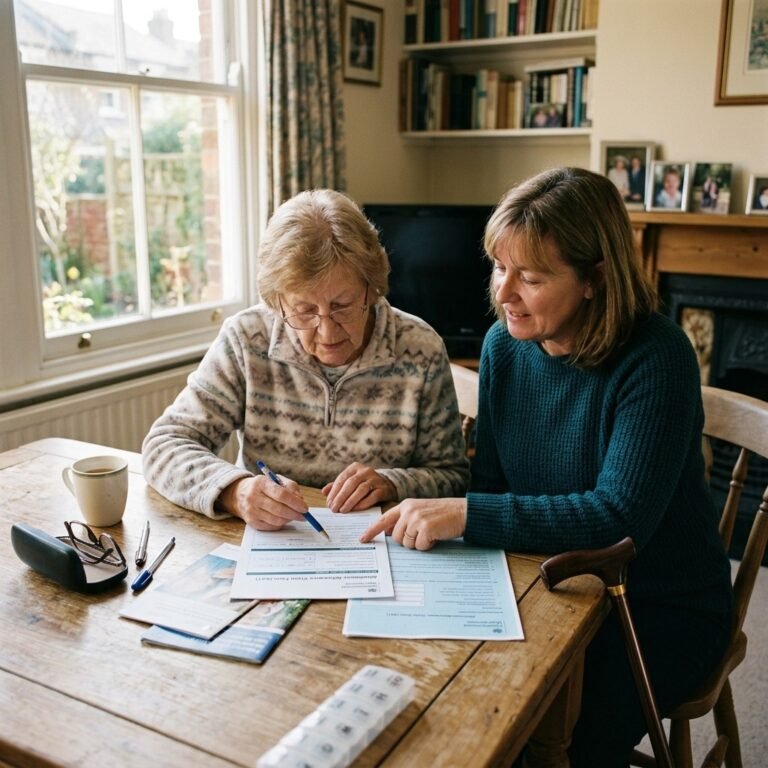
Osteoporosis qualifies for Attendance Allowance when it creates fracture-recovery care needs, chronic pain from vertebral fractures, or falls-supervision needs. Diagnosis alone is rarely enough the assessment turns on what you actually need help with, not what your DEXA scan says. Most osteoporosis claims result in the lower rate, though night pain and supervision needs can push a well-documented case to the higher rate.
When Does Osteoporosis Qualify for Attendance Allowance?
Osteoporosis Alone (Without Fracture) Usually Below Threshold
A diagnosis of osteoporosis, on its own, rarely qualifies. The DWP assesses what you need help with, not what your medical records say. If bones are fragile but you haven’t fractured, haven’t fallen, and manage daily tasks independently, the care threshold is unlikely to be met. That said, if fracture risk already limits what you can safely do alone reaching overhead, bending to load the dishwasher, carrying shopping those restrictions are genuinely relevant, even without an actual fracture on record.
After a Fragility Fracture The 6-Month Rule Applies
The 6-month rule requires that care needs have existed for at least 6 months before a claim succeeds. A fragility fracture one caused by a fall from standing height or less, or by minimal force typically triggers care needs that easily satisfy this. Hip fractures, vertebral fractures, and pelvic fractures all create immediate, significant, and lasting support requirements. A Colles’ wrist fracture is usually more time-limited but can still support a claim if recovery is slow or the dominant hand is affected.
Multiple Vertebral Fractures and Chronic Pain
Vertebral compression fractures are the most common osteoporotic fracture, and they often accumulate silently over time. Each fracture contributes to kyphosis, height loss, and chronic back pain a combination that progressively erodes independence. Multiple vertebral fractures in different stages of healing represent a compelling case, particularly when pain is constant and posture has changed enough to affect balance.
Post-Fracture Falls Risk
After any fragility fracture, the risk of a subsequent fracture is elevated. A first hip fracture roughly doubles the risk of a second. This objectively higher falls risk combined with the more severe consequences of any fall means that supervision needs after fracture are both real and relevant to the AA assessment.
Osteoporosis Combined With Arthritis
Where osteoporosis coincides with arthritis, the combined functional impact is often more disabling than either condition alone.
DEXA Scores and Evidence What They Show (and Don’t Show)
T-Scores and Their Meaning
A T-score of -1.0 to -2.5 indicates osteopenia (reduced bone density). A T-score of -2.5 or below is the WHO threshold for osteoporosis. A score of -3.0 or lower is sometimes described as severe osteoporosis, particularly when fractures have already occurred.
FRAX Fracture Risk Scores
The FRAX tool calculates a 10-year probability of major osteoporotic fracture, using clinical risk factors alongside bone density data. A high FRAX score for example, a 20% risk of major fracture or 3% risk of hip fracture gives concrete, medical weight to falls-supervision needs that might otherwise sound exaggerated.
What DEXA Doesn’t Tell DWP
Here is where many claimants go wrong: a DEXA report describes bone density, not disability. A T-score of -3.5 with no fractures and full independence is not an AA claim. A T-score of -2.6 with two vertebral fractures, a stooped posture, chronic back pain, and inability to dress without help is a strong claim. Always translate the clinical picture into functional impact what you cannot do safely or independently.
How to Include DEXA on the AA1
Reference the DEXA result briefly in the diagnosis box, then use the free-text sections to explain what it means for your daily life. Example: “My DEXA scan shows a T-score of -3.1 at the lumbar spine and I have had three vertebral fractures, which cause constant back pain and a curved spine that affects my balance and ability to dress myself.”
Fragility Fractures and AA Timing
The 6-Month Rule After a Hip Fracture
Hip fractures almost always require surgery usually a hemi-arthroplasty or total hip replacement followed by inpatient rehabilitation and months of recovery. The 6-month care need threshold is typically met well within the first weeks post-operatively. Claims can be started during the hospital stay or early in recovery, provided the needs have existed or will clearly persist for at least 6 months.
Vertebral Fractures Often Invisible
Many vertebral fractures cause no dramatic event they’re discovered incidentally on X-ray, or only recognized retrospectively when someone has been living with worsening back pain for months. Just because a fracture wasn’t diagnosed at the time it occurred doesn’t mean it’s irrelevant now. Describe the pain and functional changes it caused, and cross-reference any imaging that confirmed it.
Colles’ (Wrist) Fracture Recovery
A Colles’ fracture of the dominant wrist can affect virtually every personal care task washing, dressing, preparing food, managing medication. Recovery typically takes 6–8 weeks in plaster followed by physiotherapy, though pain and grip weakness can persist significantly longer. If the affected wrist is the dominant hand and limitations lasted beyond 6 months, this can support a claim.
Pelvic Fractures
Pelvic fractures from low-impact falls are painful and often overlooked. They restrict sitting, standing, walking, and especially rising from a chair or toilet all tasks directly relevant to the AA assessment. Recovery is slow and care needs are often immediate and prolonged.
Repeated Fragility Fractures Building the Claim
Where someone has had multiple fragility fractures a wrist, then a vertebra, then a hip each one compounds the functional picture. Describe the cumulative impact: worsening posture, escalating pain, increasing reliance on others, and growing fear of another fracture.
Vertebral Fracture Complications
Kyphosis (Dowager’s Hump) and Mobility
Progressive kyphosis from multiple vertebral fractures changes the body’s centre of gravity, increasing falls risk and reducing the ability to look ahead when walking. It can make it difficult to stand fully upright, affecting balance and gait.
Chronic Back Pain and Daily Activities
Vertebral fractures cause chronic, often severe, back pain that affects virtually all movement. Describe exactly which tasks trigger or worsen the pain standing at a cooker, bending to put on shoes, lowering onto a chair rather than describing it generally.
Height Loss and Dressing
Significant height loss from vertebral collapse affects reach. Items previously accessible on shelves become unreachable. Pulling on trousers or socks becomes mechanically difficult when a curved spine prevents normal bending.
Rib Impingement Pain
As the spine curves and shortens, the lower ribs can impinge on the pelvis, causing pain with breathing, leaning, and even sitting for long periods. This is a specific, often underreported complication that can affect both nighttime comfort and the ability to remain seated long enough to complete daily tasks.
Respiratory Function Reduction
Severe kyphosis compresses lung capacity. Reduced respiratory function increases fatigue during ordinary activities and can compound breathlessness from any concurrent lung condition.
Hip Fracture Recovery Trajectory and Attendance Allowance
The First 12 Months After Hip Fracture
The first year after hip fracture is typically when care needs are greatest: mobility is severely restricted post-operatively, weight-bearing is limited, and the risk of falling again is high. Many people never fully return to their pre-fracture level of function.
Mobility Aids as Evidence, Not a Disqualifier
Using a walking frame, rollator, or crutches doesn’t weaken an AA claim it strengthens it. Document which aids are used, in which settings, and why. A person who can only mobilise indoors with a zimmer frame and cannot go up stairs without help has significant, documentable care needs.
Ongoing Care Needs Post-Recovery
“Recovery” from a hip fracture rarely means a return to baseline. Many older adults retain permanent reductions in walking speed, balance, and confidence. Describe what daily life actually looks like 12 or 24 months on, not just the acute phase.
Falls Risk and Confidence Loss
Research shows that around 50% of people who fall once will fall again within 12 months. After a hip fracture, fear of falling and associated confidence loss can be as disabling as the physical impairment itself and this is a recognised, assessable restriction for AA purposes.
Post-Operative Cognitive Decline (POCD)
Hip fracture surgery in older adults is associated with post-operative cognitive decline, particularly in those with pre-existing cognitive vulnerability. If concentration, memory, or orientation worsened following surgery, and someone now needs prompting or supervision to manage medication, meals, or daily routines, this is directly relevant to the claim.
The Falls Prevention Supervision Case
Multiple Falls in the Past 12 Months
Two or more falls in a 12-month period is a recognised clinical marker for high falls risk. Include dates where known. Falls that resulted in injury bruising, a fracture, or a hospital attendance carry particular weight.
Fear of Falling and Activity Restriction
Fear of falling is not a weakness or an exaggeration. It is a well-documented clinical phenomenon, often measured in clinical settings, that can restrict activity as effectively as physical inability. Describe specifically what you no longer do alone, and why: “I won’t go to the bathroom at night without waking my husband because I’m frightened of falling on the way and nobody hearing me.”
Balance Impairment and TUG Results
If you’ve attended a falls clinic or physiotherapy assessment, ask for a copy of your Timed Up and Go (TUG) test results. A TUG score of 12 seconds or more indicates increased falls risk in older adults. Including this in your claim translates a subjective concern into an objective clinical finding.
Night-Time Toilet Supervision
Getting to the toilet at night with fragile bones, impaired balance, and low lighting represents a genuine, recurring safety risk. If someone stays awake, checks on you, or accompanies you to the toilet during the night, this is a nighttime care need that contributes to the higher rate.
Bathroom Safety Supervision
Wet surfaces and confined spaces make the bathroom the highest-risk environment for falls. Needing someone present while you shower or bathe not necessarily providing physical assistance, but there as a precaution is a valid daytime care need.
Osteoporosis Medications and Care Needs
Bisphosphonate Administration Protocol (Upright 30 Minutes)
Oral bisphosphonates alendronate, risedronate must be taken on an empty stomach with a full glass of water, then the person must remain upright for at least 30 minutes before eating or lying down. This specific requirement exists because lying down after taking a bisphosphonate risks oesophageal injury. If arthritis, kyphosis, or other mobility limitations make it difficult to remain upright and still for 30 minutes, this is a medication-management care need worth mentioning.
Denosumab Injections at GP
Denosumab (Prolia) is given as a subcutaneous injection every 6 months, typically at the GP surgery. Getting to the surgery regularly for this treatment may require help with transport, particularly if mobility is already compromised.
Teriparatide Daily Injection Supervision
Teriparatide (Forteo or Movymia) is a daily subcutaneous injection used in severe osteoporosis. It requires refrigeration, reconstitution, and injection technique. If someone cannot manage this independently due to poor dexterity, vision problems, or cognitive difficulties daily help with medication administration is a concrete care need.
Zoledronate Infusion Recovery
Zoledronate (Aclasta) is given as an annual intravenous infusion. A significant proportion of patients experience a flu-like reaction fever, joint pain, fatigue in the 24–72 hours following infusion. During this period, additional care needs, including help with meals and personal care, are predictable and documentable.
HRT Considerations in Older Adults
Some older women take HRT to manage bone density alongside other menopausal consequences. Where HRT is monitored and adjusted regularly, pharmacy and GP attendance can be a logistical care need if mobility or cognitive function makes managing this independently difficult.
Weak vs Strong Osteoporosis AA1 Wording 10 Examples
1. Getting in/out of bed with vertebral pain
Weak: “My back aches in the morning.”
Strong: “I have constant pain from three spinal fractures. To get out of bed, I have to roll carefully onto my side, push up slowly, and my husband lifts me by the arm. This takes around 10 minutes every morning. If I try to sit up directly, the pain is severe and I’ve nearly fallen.”
2. Dressing with kyphosis
Weak: “I struggle to put on my clothes.”
Strong: “My spine is curved from multiple fractures and I can’t bend forward far enough to put on socks or shoes. My daughter comes every morning to dress my lower half. I can manage a loose top if it’s laid out for me, but I can’t do buttons.”
3. Bathing with fracture fear
Weak: “I’m careful in the bath.”
Strong: “I stopped using the bath after my hip fracture. I shower with a shower seat, but my daughter stands outside the door and I call to her before I get up, because I lost my balance and grabbed the rail last month. I will not shower without someone in the house.”
4. Night toilet supervision
Weak: “I get up in the night sometimes.”
Strong: “I need to use the toilet twice most nights. My husband hears me get up and walks with me because my balance is poor in the dark and I’m frightened of falling. He steadies me at the door and waits until I’m back in bed safely.”
5. Meal preparation
Weak: “Cooking is hard with my back.”
Strong: “I cannot stand at the cooker for more than five minutes because the pain in my spine worsens quickly. I can’t lift a full saucepan safely. My carer prepares all my hot meals and I only manage cold snacks independently.”
6. Taking bisphosphonates upright for 30 minutes
Weak: “I take my tablets every week.”
Strong: “I take alendronate every Monday and have to stay sitting upright for 30 minutes after taking it, on an empty stomach. Because of my kyphosis, sitting upright on a hard chair is painful, so my daughter sits with me and helps me shift position until the 30 minutes is up.”
7. Mobility indoors
Weak: “I use a walking frame.”
Strong: “I use a wheeled zimmer frame throughout the house. I cannot carry anything while using it. My husband carries my drinks and meals to where I’m sitting. I cannot manage stairs without holding the rail on both sides, and I don’t attempt them alone.”
8. Post-hip fracture routine
Weak: “I had a hip operation and I’m still recovering.”
Strong: “I had a hip replacement 14 months ago following a fall. I still cannot walk more than 20 metres without resting. I need help getting dressed from the waist down, and my district nurse visits twice a week to check the wound area and monitor my recovery. My mobility is significantly worse than before the fracture.”
9. Medication management
Weak: “I take several medications for my bones.”
Strong: “I take five different medications, including a weekly bisphosphonate and a daily calcium and vitamin D supplement. Because of memory problems since my hip operation, my daughter fills a weekly pill organiser and checks that I’ve taken each dose. Without this I sometimes take a double dose or miss tablets entirely.”
10. Reaching for kitchen items
Weak: “I can’t reach things easily.”
Strong: “I cannot reach any shelf above chest height because of the curvature in my spine and the pain it causes. My husband has reorganised the kitchen so everything I need is at counter level, and he fetches anything from higher shelves. I avoid this movement entirely because my physiotherapist warned me it increases fracture risk.”
Making the Higher-Rate Case for Osteoporosis
Night Pain From Vertebral Fractures
Vertebral fracture pain often worsens at night and frequently disrupts sleep. If pain wakes you and you need help repositioning, pain medication you can’t reach alone, warmth or cold applied to the spine this is a nighttime care need.
Repositioning Help in Bed
An inability to turn over in bed independently due to spinal fracture pain, or post-hip fracture restrictions, is a repeated nighttime need. If this happens two or three times per night and requires assistance, it is both significant and documentable.
Night Toilet Supervision for Falls Risk
As described above, if someone accompanies you to the toilet at night for safety, this alone can contribute to the higher rate particularly if it occurs frequently.
Combined With Dementia or COPD
Osteoporosis combined with dementia can create supervision needs that meet the higher-rate threshold far more readily.
Evidence to Strengthen an Osteoporosis Claim
- DEXA scan reports with T-scores at the lumbar spine and hip
- Fracture history letters from Emergency Departments, orthopaedic surgeons, or radiology reports confirming fragility fractures
- Fracture Liaison Service (FLS) letters if you’ve been referred to an FLS after a fracture, request a summary letter confirming diagnosis, fracture history, and functional impact
- Rheumatology or endocrinology letters particularly relevant for steroid-induced or secondary osteoporosis
- Physiotherapy assessments especially balance assessments or post-fracture rehabilitation notes
- Falls clinic reports including TUG test results and falls frequency
- Bone health specialist nurse letters if you receive ongoing monitoring or treatment from a bone health nurse
Steroid-Induced Osteoporosis
Long-Term Prednisolone Patients
Osteoporosis is a well-recognised complication of long-term oral corticosteroids. People taking prednisolone for conditions like rheumatoid arthritis, polymyalgia rheumatica (PMR), or COPD are at elevated fracture risk even at modest doses. The British Society for Rheumatology recommends bone protection for anyone taking 7.5mg or more of prednisolone daily for longer than 3 months.
Combined With the Underlying Condition
When steroid-induced osteoporosis is assessed for AA, the care needs from the underlying condition the arthritis, the PMR, the lung disease often substantially overlap with or compound those from the osteoporosis. Describe both pictures together and their combined functional impact.
Building the Combined-Conditions Case
The DWP assesses overall care needs, not individual conditions in isolation. Someone with PMR pain, steroid-related osteoporosis, and two vertebral fractures has a more complete picture than any single condition alone would suggest.
Osteoporosis-Specific Pitfalls
- Waiting for multiple fractures before applying. A single hip or vertebral fracture can be sufficient if the care needs are real and ongoing.
- Not mentioning invisible vertebral fractures. Many people don’t know they’ve had a vertebral fracture until an incidental X-ray reveals it. If imaging has confirmed one, describe it and its lasting effects.
- Underplaying chronic back pain. Vertebral fracture pain is not ordinary back pain of aging describe it specifically, including when it worsens, what it prevents, and how long it lasts.
- Omitting fear of falling as a functional restriction. Fear of falling is a recognised, assessable functional limitation not an emotional aside.
- Focusing on T-scores rather than impact. The number on your DEXA report does not win a claim. What you can’t do safely does.
- Missing combined conditions. If arthritis, COPD, or other conditions contribute to care needs alongside osteoporosis, each one adds to the overall picture.
Frequently Asked Questions
Does osteoporosis without any fractures qualify for Attendance Allowance?
Rarely on its own. The assessment is based on care needs, not diagnosis. If fragile bones already cause you to avoid certain tasks, need help with specific movements, or require supervision due to falls risk even without an actual fracture those restrictions can still be described and assessed.
What T-score do I need to qualify?
There is no T-score threshold for AA. A T-score of -2.5 (osteoporosis) or -3.5 (severe osteoporosis) is medically significant, but the DWP assesses what you need help with, not what your scan shows. Include your T-score as supporting evidence, then focus the claim on its functional consequences.
Do vertebral fractures qualify even if I didn’t feel them at the time?
Yes. Silent vertebral fractures those discovered on imaging rather than through a dramatic event are real fractures with real consequences. If they’ve caused chronic pain, postural changes, or height loss that now affects your daily functioning, all of this is relevant.
Can I claim during the 6-month wait after a hip fracture?
You can start a claim at any point, but the award will only take effect once the 6-month threshold is met. Claims submitted early can be backdated to the date care needs reached the 6-month mark. It’s generally worth starting the process during recovery rather than waiting.
Does osteopenia (T-score between -1 and -2.5) qualify?
Generally not on its own, unless the lower bone density is already causing fractures or genuinely restricting daily functioning. Osteopenia combined with a previous fracture and ongoing functional limitations may still support a claim.
What if I’m on bisphosphonates and my pain is now managed?
If treatment has genuinely resolved care needs and you’re managing independently, AA may not be appropriate at that time. But if pain remains, medication protocols create their own care needs (such as the upright bisphosphonate requirement), or falls risk persists despite treatment, the claim may still stand.
Can I claim for steroid-induced osteoporosis?
Yes if the resulting bone fragility, fractures, or care needs meet the AA criteria, the cause of the osteoporosis is irrelevant to eligibility. Describe care needs from both the underlying condition and the osteoporosis together.
Do I need a specialist letter from a rheumatologist or endocrinologist?
Not strictly a GP letter can support a claim. But a letter from a rheumatologist, endocrinologist, or FLS that confirms fracture history, T-scores, and functional impact is more specific and tends to carry more weight than a general GP summary.