Attendance Allowance Stroke: When to Apply and Evidence Needed
Stroke survivors can claim Attendance Allowance once care or supervision needs have persisted for six months post-stroke. Apply as soon as that six-month window closes not before, unless a terminal prognosis applies. The rate you receive (£76.70 or £114.60 per week) depends on whether your care needs occur during the day, at night, or both.
For everything generic about Attendance Allowance rates, how to apply, the benefits cascade, myths, and how AA compares to PIP see our [Attendance Allowance overview page].
The Six-Month Rule After Stroke What “Persistent” Actually Means
When does your six months start?
The clock starts from the date your care or supervision needs became consistent not the date of formal discharge, not when your diagnosis was confirmed, and not when you first saw a specialist. For most stroke survivors, that means the stroke date itself. The Department for Work and Pensions (DWP) wants to know about your needs at a stable point, not in the chaotic days immediately after the event when you may have been in intensive care.
Recovery trajectory and DWP’s assessment
DWP assessors look at your condition as it is now and has been throughout those six months not your worst day in the acute ward, and not your best day three weeks later. If your needs have fluctuated significantly, describe the pattern honestly. A stroke survivor who has good hours and bad days still has care needs; the AA1 form specifically asks how tasks affect you on difficult days, not average ones.
If you’ve had a second stroke or TIAs how it affects timing
A second stroke may extend or deepen existing care needs, potentially creating a fresh basis for claiming at a higher rate even if a first claim was already in payment. Transient Ischaemic Attacks (TIAs) are more complicated because their effects resolve within 24 hours by definition, a single TIA rarely creates a six-month pattern of care needs. However, cumulative TIAs that leave residual fatigue, cognitive change, or balance impairment can qualify. The test is always functional: what do you need help with, consistently, over time?
Can you apply before six months? (Special Rules exception only)
Yes but only if a clinician has confirmed a prognosis of 12 months or less to live. Under Special Rules, the higher rate is automatically awarded without a medical assessment and without waiting out the six months. If this applies, request form SR1 from the treating clinician and submit it with your AA claim immediately.
Hemiparesis and Personal Care Left vs Right Side Impact
Right-side stroke (left hemiparesis) typical care implications
A stroke in the right hemisphere produces weakness down the left side of the body. Left hemiparesis is frequently paired with left-sided spatial neglect the brain’s reduced attention to everything in the left visual field which affects how safely a person moves around the home, prepares food, and navigates obstacles. Someone with left neglect may collide with furniture on their left, miss food on the left side of the plate, or fail to notice a left limb becoming uncomfortably positioned.
Left-side stroke (right hemiparesis) communication + dexterity impact
A stroke in the left hemisphere typically produces right-sided weakness combined with language impairment, because language processing is located in the left hemisphere for most people. This double impact weakened dominant hand and impaired communication can make every personal care task harder to both perform and describe.
Dominant hand affected dressing, eating, writing
For around 90% of people, the right hand is dominant. Right hemiparesis therefore directly compromises the mechanics of dressing (buttons, zips, bra clasps), eating (cutting, spooning, managing cutlery), and any written communication. These are core AA1 task areas, and each one should be documented separately with specifics about time taken, pain experienced, and assistance required.
Non-dominant hand affected cutting food, opening containers
Left hemiparesis weakens the hand most people rely on to stabilise holding a plate steady, gripping a container while the other hand turns the lid, or pressing bread down while spreading. The dominant right hand may still function but cannot complete most daily tasks without the stabilising role of the left.
Both hands affected in bilateral stroke
Brainstem strokes and watershed strokes can produce bilateral weakness. This creates near-total dependence across all personal care activities and typically supports the higher rate of AA with both day and night needs well-evidenced.
Communication After Stroke Aphasia and the AA1 Form
Expressive aphasia and describing needs
Expressive (Broca’s) aphasia means a person knows exactly what they want to say but cannot reliably retrieve the words. On the AA1 form, this becomes a practical barrier: the individual may understate their needs simply because describing complex situations in writing is exhausting and unreliable. A carer or advocate completing the form on their behalf should note specifically that the claimant has expressive aphasia and describe what communication assistance they require throughout the day.
Receptive aphasia and understanding forms
Receptive (Wernicke’s) aphasia impairs understanding of written and spoken language. The AA1 form itself becomes inaccessible. This is not a minor inconvenience it means the claimant cannot safely follow instructions, understand medication labels, respond appropriately to warnings, or communicate distress to a carer without that carer being present to interpret non-verbal signals.
Global aphasia someone applying on your behalf
Global aphasia combines both expressive and receptive impairment at severe levels. A third party a family member, stroke specialist nurse, or social worker can complete the AA1 on the claimant’s behalf by ticking the appropriate box on the form. Include a letter explaining the nature and severity of the aphasia, ideally from a Speech and Language Therapist (SALT).
Dysarthria (slurred speech) safety implications
Dysarthria is a motor speech disorder the language is intact but the physical mechanism of speech is impaired. For AA purposes, the key safety issue is emergency communication: can the person summon help clearly enough to be understood? If a person falls at night and cannot produce intelligible speech, they cannot call for help via telephone. This is a legitimate supervision need.
Alternative communication aids as evidence
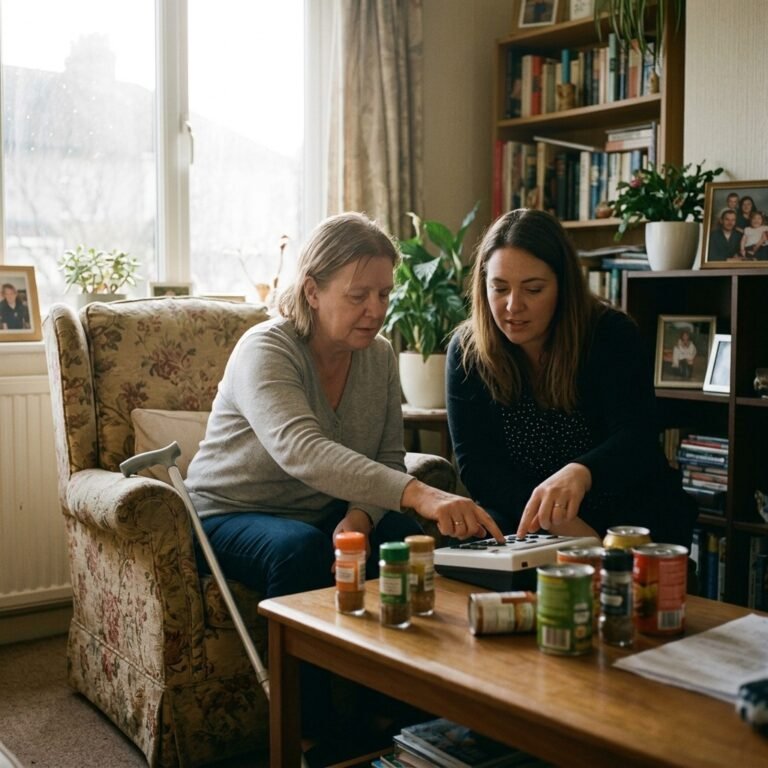
Low-tech communication boards, high-tech AAC (Augmentative and Alternative Communication) devices, or app-based systems all indicate that communication has broken down to the point of requiring specialist adaptation. Include details of any such aids in the AA1, and attach a SALT assessment report confirming their use and necessity.
Post-Stroke Dysphagia Supervision During Every Meal
Modified textures (IDDSI framework) and mealtime supervision
Swallowing difficulties after stroke are assessed using the International Dysphagia Diet Standardisation Initiative (IDDSI) framework, which categorises food into levels 0–7, from thin liquids to regular texture. A recommendation for IDDSI level 4 (puréed) or below means food preparation requires specialist modification it doesn’t arrive ready-made. Someone must prepare, serve, and supervise each meal.
Thickened fluids preparation and monitoring
Prescribing thickened fluids (IDDSI levels 1–3) addresses aspiration risk by slowing liquid movement. But thickened fluids must be prepared correctly every time incorrect consistency increases aspiration risk rather than reducing it. A stroke survivor cannot safely manage this preparation independently if they have cognitive impairment, hemiparesis affecting pouring and measuring, or fatigue that causes lapsed attention.
Aspiration risk requiring constant presence
Silent aspiration inhaling food or liquid without triggering a cough reflex is common after stroke and dangerous. It does not always produce audible signs. A person with known silent aspiration needs someone present during every meal, not occasionally and not just at first. This is a strong, specific daytime care need and should be described precisely in the AA1 with reference to the SALT assessment that identified the risk.
PEG feeding supervision even with tube feeds
Percutaneous Endoscopic Gastrostomy (PEG) feeding bypasses swallowing entirely but does not eliminate care needs. The feed must be connected, the correct rate set, the tube flushed, and the person positioned correctly to prevent reflux. If cognitive impairment or hemiparesis means the claimant cannot manage any of this independently, full mealtime supervision remains a valid care need even in the absence of oral feeding.
Non-Physical Stroke Effects That Support a Claim
Cognitive impairment attention, memory, executive function
Post-stroke cognitive impairment is frequently invisible to DWP assessors focused on physical function. Deficits in attention (sustaining focus long enough to cook safely), working memory (forgetting mid-task that the hob is on), and executive function (planning and sequencing a task from start to finish) all create genuine safety risks. Describe each one with a concrete example: “She started the kettle and walked away, returning only when the smoke alarm activated.”
Post-stroke fatigue different from ordinary tiredness
Post-stroke fatigue is neurological, not motivational. It arrives without warning, typically in the afternoon, and makes further activity unsafe rather than merely uncomfortable. A person who manages independently for two hours may become entirely unable to function safely by 2pm. This pattern independence followed by a cliff-edge is exactly the kind of inconsistent but recurring need that qualifies for Attendance Allowance. Describe when in the day fatigue hits and what it prevents.
Vascular dementia risk and progression
Multiple strokes or a single strategically placed stroke can cause vascular dementia. If post-stroke cognitive decline is progressing rather than stabilising, document it both because it strengthens the current claim and because DWP should award a sufficient duration to avoid unnecessary distressing reassessments.
Post-stroke depression and emotional lability
Emotional lability (pseudobulbar affect) produces uncontrollable crying or laughing disproportionate to circumstances. It is neurological, not purely psychological, and can create supervision needs when it occurs in unsafe situations while cooking, while near traffic, or during personal care. Post-stroke depression further reduces a person’s ability to initiate or complete tasks safely without prompting.
Vision changes hemianopia and neglect
Homonymous hemianopia (loss of half the visual field) increases falls risk, kitchen safety risk, and road crossing risk significantly. Left-sided spatial neglect goes further the brain does not register that the left side exists. Neither condition is reliably captured by standard optometry results; a neuropsychological assessment or stroke rehab report is far more informative for DWP.
Incontinence urgency and disorientation
Around 30–60% of stroke survivors experience urinary incontinence in the acute phase, with a significant proportion retaining some degree of urgency or nocturia long-term. At night, reduced mobility plus urinary urgency plus cognitive disorientation creates a combination that routinely requires another person to be present to assist safely.
Weak vs Strong Stroke AA1 Wording (12 Examples)
1. Transferring bed to chair with hemiparesis
- Weak: “I need a bit of help getting up in the morning.”
- Strong: “I cannot transfer safely from bed to wheelchair without a second person steadying my left side. Without assistance I would fall. This takes 10–15 minutes each morning.”
2. Dressing with one usable hand
- Weak: “Dressing is difficult.”
- Strong: “My right hand has no functional grip following my stroke. I cannot fasten buttons, manage zips, or pull clothing over my affected arm without someone guiding the limb and fastening every garment. This takes 25 minutes with help.”
3. Cutting food with tremor
- Weak: “I struggle to cut food.”
- Strong: “Post-stroke intention tremor in my right hand means I cannot safely hold a knife near food. My carer cuts everything into bite-sized pieces before every meal.”
4. Aphasia describing needs
- Weak: “I have a bit of trouble speaking.”
- Strong: “I have expressive aphasia following my stroke. I know what I need but cannot reliably find the words. My carer has learned to interpret my gestures and non-verbal signals, including during personal care, as I cannot direct help verbally in real time.”
5. Sequencing tasks with executive dysfunction
- Weak: “I sometimes forget things.”
- Strong: “I cannot plan and complete a sequence of tasks safely. Last week I put the kettle on, walked to the bedroom, and forgot I had done so. My husband now supervises all kitchen tasks from start to finish.”
6. Safety awareness deficit
- Weak: “I need supervision sometimes.”
- Strong: “I have reduced hazard awareness following my stroke. I do not always perceive that water is scalding, that I have moved close to a gas hob, or that I am on an uneven surface. I need someone within arm’s reach during all mobility and kitchen tasks.”
7. Mealtime dysphagia supervision
- Weak: “I have a swallowing problem.”
- Strong: “My SALT assessment (August 2024) identified silent aspiration at IDDSI level 2. Someone must sit with me throughout every meal and monitor for signs of aspiration. I cannot eat safely alone under any circumstances.”
8. Medication management with cognitive impairment
- Weak: “I sometimes forget to take my tablets.”
- Strong: “Due to post-stroke memory impairment, I cannot reliably recall whether I have taken my medication. My carer organises a weekly pill dispenser and verbally prompts me morning and evening, confirming each dose is taken.”
9. Night toilet transfers
- Weak: “I get up at night.”
- Strong: “I wake 2–3 times nightly with urinary urgency. I cannot transfer from bed to commode safely without assistance due to left hemiparesis. My husband gets up each time to prevent me falling in the dark.”
10. Communication with emergency services
- Weak: “I have trouble on the phone.”
- Strong: “My dysarthria means I cannot produce clear speech under stress. If I fell when alone, I would be unable to give my address or needs to an emergency operator. I am not safe to be left unattended for any significant period.”
11. Hemianopia and cooking safety
- Weak: “My vision isn’t great.”
- Strong: “I have a left homonymous hemianopia following my stroke. I do not perceive anything to my left. I have collided with the oven door and missed items on the hob on multiple occasions. I cannot cook safely without someone present.”
12. Fatigue affecting the whole afternoon
- Weak: “I get tired easily.”
- Strong: “Post-stroke neurological fatigue renders me unsafe to act independently from approximately 1pm. I cannot safely manage the stairs, take medication, or prepare food after this time without prompting and physical assistance. My carer is present every afternoon.”
The Higher-Rate Case After Stroke
Night-time transfers with hemiparesis
To qualify for the higher rate, you need care or supervision at night as well as the day. For stroke survivors with hemiparesis, night transfers from bed to toilet or bed to commode frequently require physical assistance from another person. Document each occasion: how many times per night, what assistance is given, and what the risk of falling without that assistance would be.
Positioning to prevent pressure sores (if immobile)
Stroke survivors with significant hemiplegia who cannot reposition themselves overnight are at risk of pressure injuries. A carer who repositions them regularly throughout the night is providing prolonged night-time attendance exactly the scenario the higher rate is designed to cover.
Supervision for cognitive-impairment safety at night
Post-stroke confusion or disorientation at night getting up and not knowing where the bathroom is, or attempting to leave the house creates a supervision need even without physical intervention. A carer who must remain alert and available to redirect the claimant to safety is providing attendance, even if they are not always physically touching the person.
Nocturia and post-stroke urinary urgency
Post-stroke urinary urgency does not respect convenient timing. Three nightly toileting episodes requiring a carer to assist with each transfer creates a pattern of prolonged, repeated night attendance. Log these episodes over several weeks and include the log with the claim.
Evidence to Strengthen a Stroke Claim
A strong stroke claim includes condition-specific documentation rather than generic GP summaries. Prioritise:
- Stroke specialist nurse letter confirming current functional limitations
- Consultant stroke physician clinic notes showing ongoing impairments and follow-up care
- Occupational therapy discharge summary from the stroke unit listing specific ADL deficits
- SALT (Speech and Language Therapy) assessment detailing aphasia type, dysarthria severity, and dysphagia level (IDDSI rating)
- Modified Rankin Scale (mRS) score scores of 3 (moderate disability, requires some help), 4 (moderately severe disability), or 5 (severe disability, bedridden) are directly relevant to AA eligibility
- Barthel Index score a low score indicates dependence across multiple ADL domains
- Physiotherapy home assessment report describing the home environment, transfer risks, and mobility aids in use
- Community stroke team notes covering ongoing therapy, risk concerns, and carer involvement
If you have a carer’s diary or GP-signed prescription list for modified diet/thickened fluids, include those too. The AA1 itself carries more weight when corroborated by condition-specific clinical language.
Recovery vs Fixed Deficit How DWP Views Improvement
Neuroplasticity timeline and DWP’s view
The majority of neurological recovery after stroke occurs in the first three to six months, with meaningful but slower progress continuing up to approximately two years. DWP is aware of this trajectory. Assessors may make shorter-term awards (two to three years) if evidence suggests the claimant’s condition is still changing, rather than awarding indefinitely.
If you improve, when does DWP review your award?
DWP sets the award end date at the time of decision. If you improve significantly before that date, you are under a legal obligation to report a change of circumstances. Failure to do so —and continuing to receive payment risks an overpayment debt. However, ordinary fluctuation and gradual improvement within the same functional category do not trigger a change of circumstances.
Change of circumstances notification
A change must be reported if your care needs decrease to below the lower-rate threshold (no longer needing help during the day or at night in the relevant way), or if your needs increase to the point where you now qualify for the higher rate and are currently on the lower rate. Contact the Attendance Allowance helpline on 0800 731 0122.
Awards for “progressive” vs “stable” needs
Where vascular dementia or recurrent stroke risk is present, the condition may be progressive. In that scenario, note in the AA1 that needs are expected to increase, and provide clinical evidence of the prognosis. DWP can award ongoing (indefinite) AA in these circumstances, avoiding repeated reassessments.
Frequently Asked Questions
Can I claim Attendance Allowance within six months of my stroke?
You can submit the AA1 form before six months are up to save processing time, but payment will not begin until the six-month threshold is reached. Do not describe early recovery stages on the form describe your needs at the point you expect to be assessed.
Do TIAs count toward the six-month rule?
A single TIA with full recovery usually does not, because by definition the impairment is temporary. However, cumulative TIAs that leave lasting fatigue, cognitive change, or balance problems can form the basis of a claim if those effects have persisted for six months.
What if my stroke was 20 years ago?
The six-month rule only applies at the point of initial claim. If you have never claimed and your stroke from 20 years ago still causes qualifying care needs today, you can claim now. The question is always about your current needs, not the date of the stroke.
Does Attendance Allowance affect my Community Stroke Team support?
No. AA is a non-means-tested cash benefit and does not affect NHS or local authority stroke rehabilitation services. It may, however, increase your entitlement to income-related benefits such as Pension Credit, which in turn can unlock free NHS prescriptions and Council Tax Reduction.
Can I claim if I’ve had a full physical recovery but have cognitive issues?
Yes. Cognitive impairment including memory problems, executive dysfunction, impaired safety awareness, and post-stroke fatigue is sufficient grounds for an AA claim without any physical deficit. Describe precisely what tasks you cannot initiate, sequence, or complete safely, and attach neuropsychological or OT evidence.
Do I need my consultant’s letter?
You do not need it to submit the claim, but including one significantly strengthens the application. A letter from a stroke consultant or specialist nurse confirming ongoing functional limitations in clinical language reduces the likelihood of a refusal and may avoid the need for a medical assessment.
Does the type of stroke haemorrhagic vs ischaemic affect my claim?
No. DWP does not distinguish between stroke types for Attendance Allowance purposes. The eligibility criteria focus entirely on the functional impact of the condition, not its mechanism. Both haemorrhagic and ischaemic strokes are treated identically in terms of qualifying need.
Can I claim for a mini-stroke (TIA)?
Only if the TIA has left persistent care or supervision needs lasting at least six months. If you recovered fully, a single TIA alone will not qualify. If cumulative TIAs have caused lasting impairments, the same functional test applies as for any other condition describe what you need help with, every day, over time.