
Attendance Allowance Scotland: PADP Rates, Changes & Eligibility 2026
Attendance Allowance no longer exists for people living in Scotland. It was replaced by Pension Age Disability Payment (PADP), administered by Social Security Scotland rather than the DWP. Existing claimants were moved across automatically during 2025, and anyone applying fresh now goes through mygov.scot instead of GOV.UK. Rates, eligibility, and the two-tier structure remain the same as Attendance Allowance what’s changed is who pays it, how you apply, and what happens if you cross the border.
Attendance Allowance Scotland Changes: What Actually Happened
Scotland didn’t get a new benefit built from scratch. Pension Age Disability Payment is Attendance Allowance being replaced in Scotland with a Scottish-run equivalent that keeps the same rates and broadly the same qualifying rules. The rollout happened in stages rather than overnight.
The 2025 Rollout, Area by Area
PADP opened for new applications in Aberdeen City, Argyll and Bute, Highland, Orkney, and Shetland first. From 24 March 2025, it extended to Aberdeenshire, the Ayrshires, Na h-Eileanan Siar, Stirling, Clackmannanshire, Falkirk, Fife, Angus, Dundee City, and Perth & Kinross. By 22 April 2025, it was available across the whole of Scotland (Scottish Government, 2025). If you were still applying for Attendance Allowance from the DWP after that date while living in Scotland, you were applying for the wrong benefit.
The Automatic Transfer of Existing Claims
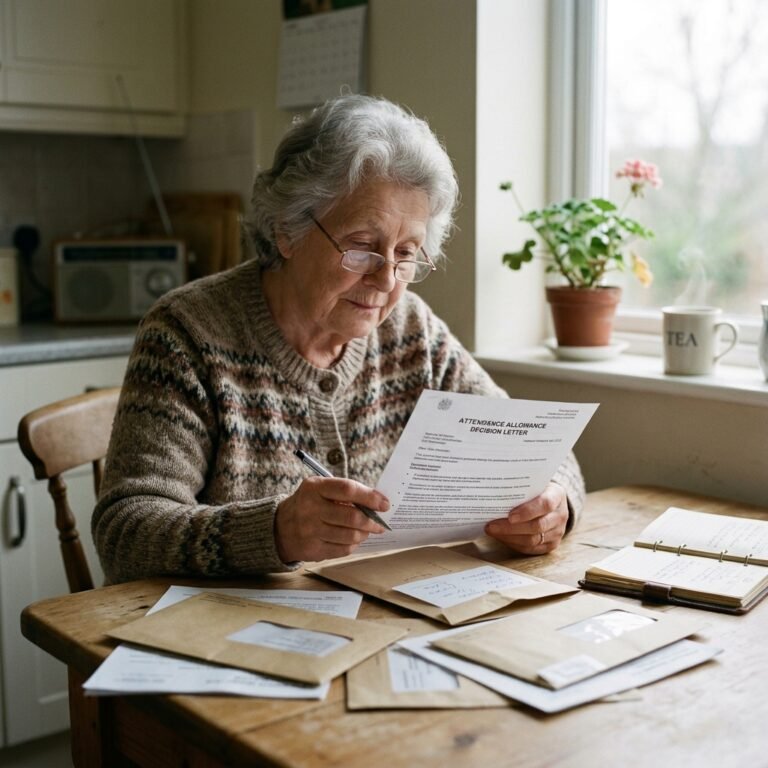
If you were already getting Attendance Allowance and living in Scotland, you didn’t need to do anything. Social Security Scotland began transferring 169,000 existing awards in phases throughout 2025 (Scottish Government, 2025). The DWP kept paying Attendance Allowance until Social Security Scotland was ready to take over there was no gap and no drop in payment. Each person received a letter confirming their transfer was underway, and the whole exercise was targeted for completion by the end of 2025.
If you’re in Scotland now and still haven’t had that letter, that’s a signal to contact Social Security Scotland directly rather than assume everything is fine.
Who Pays Pension Age Disability Payment, and Does That Change Anything?
Social Security Scotland not the Department for Work and Pensions administers PADP. This matters for three practical reasons.
First, the application channel is different. You apply through mygov.scot, not gov.uk, and the phone number is 0800 182 2222, not the DWP’s Attendance Allowance line.
Second, Social Security Scotland runs its own accelerated process for people who are terminally ill. Unlike the DWP, which only classes someone as terminally ill under Special Rules if they’re expected to live 12 months or less, Social Security Scotland applies no such time limit anyone with a terminal diagnosis qualifies for the fast-tracked, automatic higher rate (Scottish Government, 2025).
Third, Social Security Scotland offers face-to-face application support through local teams, alongside independent advocacy from VoiceAbility, which is funded by the Scottish Government specifically to help people apply for devolved benefits.
Pension Age Disability Payment Rates: Same Numbers, Different Payer
PADP pays at the same two rates Attendance Allowance always has:
- Lower rate: £76.70 a week for help or supervision needed during the day or the night
- Higher rate: £114.60 a week for help or supervision needed during both the day and the night
These figures are current as confirmed by mygov.scot and the Scottish Government. It’s paid every four weeks, is not means-tested, and doesn’t count as income for Pension Credit purposes. If you want a full breakdown of what counts toward each rate, that’s covered on our main Attendance Allowance page the qualifying tests themselves haven’t changed with devolution.
Applying for PADP: What’s Different From an Attendance Allowance Claim
The eligibility criteria for PADP mirror Attendance Allowance closely: you need to have reached State Pension age, have care needs from a physical or mental health condition, and have needed that help for at least six months (unless you’re terminally ill, in which case the wait is waived). Where things diverge is the mechanics of claiming.
You apply online through the Social Security Scotland portal, by phone, or by paper form requested through the same 0800 number. Social Security Scotland has also built in support in formats including British Sign Language and translated materials, reflecting a broader push toward accessible, in-person help that goes beyond what the DWP typically offers for Attendance Allowance.
One genuinely useful difference: Social Security Scotland’s guidance encourages applicants to describe their night-time needs in as much detail as their daytime needs. Night-time need is very often the deciding factor between the lower and higher rate, and it’s the part people tend to under-report because they don’t think of themselves as “needing help” simply because someone checks on them, or because they wake confused, or because a fall risk means someone should be listening out. If that applies to you, be specific about frequency and what actually happens, not just that it happens.
What If You Already Get Attendance Allowance in Scotland?
You do not need to apply for PADP. Social Security Scotland moves you across automatically, and your award level and rate carry over without any interruption to payment. You’ll get a letter telling you the transfer is happening and another once it’s complete. Until that final letter arrives, keep reporting any change of circumstances to the DWP as normal not to Social Security Scotland.
Moving Between Scotland and England or Wales
This is one of the areas where getting the timing wrong genuinely costs people money, so it’s worth being precise.
Moving from England or Wales to Scotland: Your Attendance Allowance stops 13 weeks after you move. You need to tell the DWP you’ve moved and make a new application for PADP as soon as possible after relocating don’t wait for the 13 weeks to run out (GOV.UK, 2026). The same applies if you have an Attendance Allowance application pending, or you’re waiting to hear back on a challenged decision you still need to notify the DWP and apply for PADP separately.
Moving from Scotland to England or Wales: You need to report your move to Social Security Scotland and separately apply for Attendance Allowance from the DWP. Social Security Scotland will confirm when your PADP payments stop. Apply for Attendance Allowance as soon as you move delaying the application is what causes a gap in payments, not the move itself.
In both directions, the rule of thumb is the same: report the move immediately, and apply for the new benefit immediately, rather than waiting for the old one to formally end first.
What Pension Age Disability Payment Unlocks in Scotland
Getting PADP can increase your entitlement to other support, exactly as Attendance Allowance does elsewhere in the UK. This can include:
- Pension Credit, Housing Benefit, and Council Tax Reduction PADP isn’t counted as income for any of these, and being awarded it can trigger extra premiums.
- Carer Support Payment for someone who cares for you regularly. This is Scotland’s replacement for Carer’s Allowance, currently paid at £86.45 a week, rising to £98.15 once the Scottish Carer Supplement is added (Coalition of Carers in Scotland, 2026). It’s worth noting that a carer claiming this can affect your own means-tested benefits, so it’s sensible to get advice before they apply.
- Blue Badge applications and reduced-cost or free travel on public transport.
- Warmer Homes Scotland support for energy costs, accessed through Home Energy Scotland.
How PADP Interacts With Free Personal and Nursing Care
Scotland has offered free personal care to people 65 and over since 2002, and this runs alongside PADP rather than replacing it. From 1 April 2026, local authorities pay £260.30 a week toward personal care costs and £117.10 a week toward nursing care where assessed as needed (Care Information Scotland, 2026).
The interaction depends entirely on who’s paying for care, not on whether you also get PADP:
- If you’re funding your own care at home or in a care home in full, PADP continues without interruption.
- If your care costs are being met from public funds including through Free Personal and Nursing Care payments made directly to a care home PADP usually stops after 28 days in a care home. This can be cumulative across separate stays, so a week here and a week there can add up to the 28-day threshold without you necessarily realizing it.
Report a move into care, or a change in who’s funding it, to Social Security Scotland promptly. Overpayments are recoverable, and nobody wants a repayment letter arriving during an already difficult transition.
Adult Disability Payment vs. PADP: Don’t Confuse the Two
Adult Disability Payment (ADP) is Scotland’s replacement for Personal Independence Payment, aimed at working-age adults. If you’re already getting ADP when you reach State Pension age, you stay on ADP you do not transfer to PADP automatically, and you shouldn’t apply for PADP while ADP is in payment (mygov.scot, 2026). The two benefits use different forms, different qualifying tests, and serve different populations even though both eventually cover people over pension age in some circumstances. If you’re unsure which one applies to your situation, that’s worth clarifying with Social Security Scotland before you submit anything.
Common Mistakes Scottish Applicants Make
A few avoidable errors come up repeatedly:
- Trying to claim Attendance Allowance online through GOV.UK. Scottish addresses are routed to PADP information instead if you’re filling in an AA1 form, you’re in the wrong place.
- Calling the DWP helpline out of habit. You’ll be redirected to Social Security Scotland, which wastes time you could have spent on the actual application.
- Missing or ignoring the transfer letter. If it doesn’t arrive when you expect it, contact Social Security Scotland rather than assuming the transfer will sort itself out.
- Forgetting to report care funding changes, particularly a move into a care home, which is the single biggest cause of PADP overpayments.
Getting Help With a PADP Application or Transfer
If any part of this feels complicated, you’re not expected to navigate it alone. Age Scotland’s helpline (0800 12 44 222) offers benefit checks alongside PADP guidance. Citizens Advice Scotland can help complete applications and challenge decisions. VoiceAbility provides independent advocacy specifically for people applying for Scottish devolved benefits, funded by the Scottish Government for exactly this purpose.
Frequently Asked Questions
Do I need to apply for PADP if I’m already getting Attendance Allowance?
No. Social Security Scotland transfers existing Attendance Allowance awards automatically. You’ll receive a letter confirming the move, and there’s no gap in payment during the process.
When did Attendance Allowance stop being available in Scotland?
New Attendance Allowance claims from Scottish addresses stopped being accepted as PADP rolled out area by area between February and 22 April 2025, when it became available nationwide.
Is Pension Age Disability Payment paid at the same rate as Attendance Allowance?
Yes. Both the lower rate (£76.70 a week) and higher rate (£114.60 a week) match Attendance Allowance rates, and PADP is uprated in the same way each year.
What happens if I move from England to Scotland while receiving Attendance Allowance?
Your Attendance Allowance stops 13 weeks after the move. You must tell the DWP you’ve relocated and apply for PADP separately and promptly to avoid a gap in payment.
Can I get both Adult Disability Payment and PADP?
No. If you’re already receiving ADP when you reach State Pension age, you remain on ADP and don’t transfer to or apply for PADP.
Does PADP affect my Free Personal and Nursing Care entitlement?
No, they’re assessed independently. However, if your care costs start being met from public funds, PADP itself typically stops after 28 days in a care home.

One Comment