Attendance Allowance Frailty: CKD Stages, Care Needs and AA1 Evidence
Frailty is a recognized clinical syndrome not just old age and it qualifies for Attendance Allowance when it creates genuine care needs. The Rockwood Clinical Frailty Scale (CFS) and the Fried phenotype both provide clinically grounded frameworks that map directly to AA eligibility. Claimants at CFS level 5 or above often qualify, with those at level 7–8 commonly awarded the higher rate. For a full overview of AA rates, eligibility rules, and how to apply, see our [Attendance Allowance homepage].
What Is Frailty for AA Purposes?
Frailty as a clinical syndrome not “just old age”
Frailty is a distinct, diagnosable clinical syndrome characterized by reduced physiological reserve across multiple body systems. It is not a natural consequence of ageing. According to research published in Clinical Interventions in Aging (Chen et al., 2014), frailty affects approximately 10% of adults over 65 and more than 25% of those over 85. The critical distinction and the one that matters most for a DWP decision-maker is that frailty creates measurable, documented care needs that go beyond what healthy older adults experience.
The Fried phenotype (5 criteria)
The most widely cited clinical definition of frailty comes from Fried et al. (2001), published in the Journals of Gerontology. The Fried phenotype identifies five criteria:
- Unintentional weight loss more than 4.5 kg (approximately 10 lbs) in the past year
- Self-reported exhaustion persistent fatigue affecting daily function
- Muscle weakness reduced grip strength, adjusted for gender and BMI
- Slow walking speed taking more than 5 seconds to walk 4 metres
- Low physical activity significantly reduced weekly energy expenditure
Meeting three or more criteria means the person is classed as frail. Meeting one or two criteria places them in the pre-frail category.
The Rockwood Clinical Frailty Scale
The Clinical Frailty Scale (CFS), developed by Rockwood et al. and published in the Canadian Medical Association Journal (2005), is a 9-point clinician-rated scale that summarizes overall fitness and frailty after clinical assessment. It was updated to its current version (v2.0) in 2020. Levels 5 through 8 all describe degrees of frailty, from mild to very severe. Geriatricians and hospital elderly care teams routinely assign CFS scores, making this one of the most powerful pieces of evidence you can include in an AA claim.
Physical frailty vs cognitive frailty vs both
Physical frailty alone creates clear care needs around mobility, washing, dressing, and meal preparation. Cognitive frailty which combines physical frailty with mild cognitive impairment generates an additional layer of supervision needs. When both are present, the combined effect on daily functioning is significantly greater than either component alone and substantially strengthens the case for the higher rate.
Frailty vs sarcopenia vs multi-morbidity
These three terms are related but not interchangeable. Sarcopenia refers specifically to the age-related loss of skeletal muscle mass and strength it is one mechanism driving physical frailty. Multi-morbidity describes the coexistence of two or more chronic conditions. Frailty is the broader syndrome that often results from both, but is defined by its impact on reserve capacity and vulnerability to stressors. An AA claim based on frailty should acknowledge all three where applicable, because together they paint the most complete picture of care need.
The Clinical Frailty Scale and AA
CFS 1–3 (Very Fit to Managing Well) below threshold
People scoring CFS 1 through 3 are generally fit, active, and self-managing. Care needs are unlikely to meet the AA threshold without significant additional conditions.
CFS 4 (Living with Very Mild Frailty) variable
At CFS 4, the person has symptoms that limit strenuous activity but remains largely independent. An AA award at this level is possible only where specific personal care tasks are genuinely difficult for example, where poor grip strength prevents safe bathing.
CFS 5 (Living with Mild Frailty) lower rate possible
CFS 5 individuals need help with heavier tasks, tire quickly, and often require prompting or physical help with personal care. A lower-rate award is realistic, particularly where the claim is supported by physiotherapy or GP evidence documenting functional limitations.
CFS 6 (Living with Moderate Frailty) lower rate typical
At CFS 6, the person needs help with all outdoor activities and with some personal care tasks. Lower-rate Attendance Allowance is the typical award at this level, though strong evidence of night-time needs can push toward the higher rate.
CFS 7 (Living with Severe Frailty) higher rate common
CFS 7 describes a person who is completely dependent on others for all personal care bathing, dressing, mobilizing, eating. Higher-rate awards are common at this level, especially when combined with documented night-time supervision needs.
CFS 8 (Living with Very Severe Frailty) higher rate near-automatic
At CFS 8, the person is fully dependent on care for all aspects of daily living, often bed-bound for much of the day. A higher-rate award is the expected outcome when claims are properly documented.
The Cumulative Conditions Advantage
How multiple conditions combine on the AA1
Each condition in a frail older person’s history adds care needs. The AA1 form asks about help needed not diagnoses so the strategy is to document how every condition contributes to every care task.
Arthritis + heart failure + mild dementia = strong combined case
Arthritis limits grip strength and dexterity, making buttons, jars, and taps difficult. Heart failure causes breathlessness and fatigue that slow all personal care tasks. Mild dementia adds the need for prompting, sequencing support, and supervision. Individually, each might produce modest needs. Together, they typically produce a compelling claim.
Day needs from one condition + night needs from another = higher rate
A person whose breathlessness from COPD requires daytime help with washing and dressing, and whose nocturia from prostate disease or diuretic medication causes nighttime falls risk, has both day and night needs the threshold for the higher rate.
Common combinations in older adults
Clinically frequent frailty clusters include: osteoporosis + falls history + osteoarthritis, heart failure + type 2 diabetes + peripheral neuropathy, and COPD + sarcopenia + anxiety. Each combination generates a different but overlapping pattern of care need that the AA1 can capture systematically.
How to structure the form for multi-morbidity
List each condition at the start of the form, then for each personal care task reference all conditions that contribute. Do not answer questions condition by condition. Answer task by task, drawing on every relevant condition.
Sarcopenia and Muscle Weakness
Grip strength and daily tasks
Reduced grip strength a core Fried criterion directly affects the ability to open packaging, turn taps, use cutlery, manage clothing fastenings, and handle bottles of medication. Grip dynamometry results from a physiotherapy assessment provide objective supporting evidence.
Chair-to-stand ability
The five-times sit-to-stand test (5xSTS) is a validated measure of lower limb strength and frailty. Inability to complete five chair-to-stand repetitions within 15 seconds indicates clinically significant weakness. This directly affects the ability to use the toilet, get in and out of the bath or shower, and stand at a kitchen worktop.
Walking speed as functional measure
A walking speed below 0.8 metres per second, or needing more than 5 seconds to walk 4 metres, is an established frailty marker. In AA terms, it means the person cannot move safely between rooms without risk of falling a direct care need.
Falls history (2+ in past year)
Two or more falls in the past year signals a falls cascade. In AA terms, a history of falls justifies the need for supervision during mobility, transferring, and night-time toilet visits. Document dates, circumstances, and any injuries.
Weight loss (unintentional 5%+ in year)
Unintentional weight loss of 5% or more of body weight over one year meets the Fried criterion and indicates the person is not adequately managing their nutritional intake a documentable care need.
Cognitive Frailty and Delirium Risk
Mild cognitive impairment
Mild cognitive impairment (MCI) reduces processing speed, short-term memory, and the ability to sequence tasks. It means the person may need prompting to initiate personal care, reminders to eat or drink, and assistance planning medication routines.
Delirium episodes and supervision
A history of delirium particularly post-operative or post-admission delirium substantially increases supervision needs. During episodes, the person cannot safely manage any personal care task independently. Between episodes, the underlying vulnerability justifies precautionary supervision.
Post-hospital-discharge cognitive decline
Cognitive function commonly declines following hospital admission in frail older adults. If the person has experienced post-discharge confusion, disorientation, or behavioral changes, this is a well-documented phenomenon that supports the need for ongoing supervision.
Executive function decline
Decline in executive function planning, sequencing, decision-making means the person cannot reliably manage multi-step tasks: preparing meals, managing medications, or responding to household emergencies. This generates significant care needs even when memory appears relatively intact.
Combining cognitive and physical frailty
When cognitive frailty accompanies physical frailty, the claim enters significantly different territory. For dementia-specific guidance on AA, see our [dementia and Attendance Allowance page].
Comprehensive Geriatric Assessment as Evidence
What a CGA covers
A Comprehensive Geriatric Assessment (CGA) is a multidisciplinary evaluation covering medical conditions, functional status, cognition, mental health, social circumstances, nutrition, and medication burden. It is considered the gold standard frailty assessment tool.
How to access a CGA
CGAs are available through geriatric medicine outpatient clinics, memory services, falls clinics, and community frailty teams. A GP referral to elderly medicine or a community matron can initiate the process.
The CGA report as AA evidence
A CGA report that includes a CFS score, functional status, and multi-disciplinary team recommendations is among the strongest possible evidence attachments for an AA claim. It demonstrates that the person’s frailty has been clinically quantified by experts.
Multi-disciplinary team recommendations
MDT recommendations within a CGA such as occupational therapy home adaptations, physiotherapy for falls prevention, or community nursing support confirm the person’s care needs in professional, independent language.
The Falls Cascade and AA
One fall leads to fear of falling. Fear of falling leads to activity restriction. Restriction leads to deconditioning. Deconditioning increases frailty. This cascade is clinically well-recognized and it generates a progressively larger set of AA-qualifying care needs at each stage.
A single fall with injury (fracture, laceration, prolonged time on the floor) creates documented recovery care needs. Multiple falls indicate a systemic supervision requirement during any mobility. Night falls particularly in those with nocturia or confusion are strong evidence for the higher rate.
Undernutrition and Care Needs
Poor appetite, early satiety, and reduced sense of smell all common in frailty reduce caloric intake. The resulting care needs include help with meal preparation, encouragement to eat, assistance with shopping, and supervision of nutritional supplement consumption. If the person is receiving input from a dietitian or has had a MUST (Malnutrition Universal Screening Tool) score recorded, include this as evidence.
Polypharmacy Management
Complex dosing schedules
Frail older adults commonly take 10 or more medications daily, each with different dosing times, food interactions, and administration methods. Managing this alone is cognitively demanding and physically challenging for those with grip weakness or tremor.
Dosette box preparation
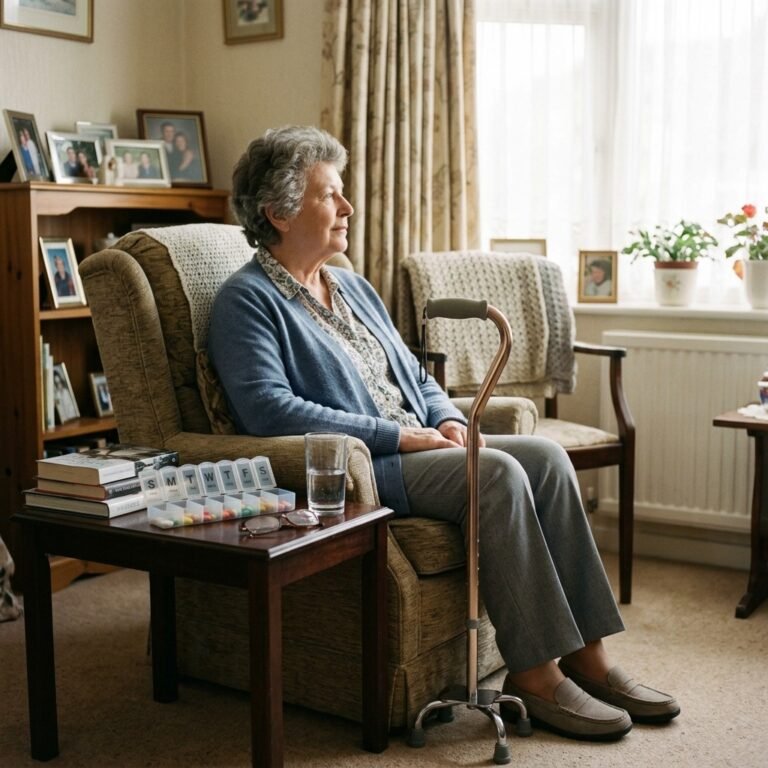
Weekly dosette box preparation requires fine motor skill, concentration, and medication literacy. If the person cannot manage this independently, it is a documented care need even if a carer or pharmacist currently fills the box.
Interaction supervision and side effect monitoring
Multiple medications increase the risk of interactions, adverse effects, and falls risk (particularly from antihypertensives, diuretics, and sedatives). The supervision required to detect and respond to side effects is a legitimate AA care need that is frequently overlooked on claim forms.
Weak vs Strong Frailty AA1 Wording
| Task | Weak wording | Strong wording |
| Getting out of a chair | “I find it hard to get up” | “Due to severe bilateral lower limb weakness, I cannot rise from any chair without using both arms to push, and I am at risk of falling if I attempt this unaided I need physical assistance every time” |
| Taking medications | “I have lots of tablets” | “I take 12 medications at four different times each day. Without a carer to prepare my dosette box weekly and prompt me three times daily, I frequently miss doses, which has previously triggered a hospital admission” |
| Bathing safely | “I am careful in the bath” | “My grip weakness and unsteady balance make stepping over the bath edge dangerous. I require physical assistance from another person to enter and exit, and supervision throughout, to prevent a fall” |
| Preparing a simple meal | “I struggle to cook” | “Fatigue from heart failure means I cannot stand at the cooker for more than two minutes. I cannot safely manage hot pans or boiling water, and I require someone to prepare even simple hot meals” |
| Night-time toilet with fall risk | “I get up at night” | “I need to use the toilet two to three times per night. My walking speed and balance deteriorate significantly at night, and I have fallen twice attempting this unaided I now require someone to escort me each time” |
| Remembering appointments | “I sometimes forget” | “I cannot reliably recall appointments within 48 hours of being told them. Without a carer writing them down, reminding me the day before, and accompanying me, I would consistently miss medical appointments” |
| Responding to phone | “I don’t always hear it” | “Due to confusion in the evenings, I cannot reliably understand or respond appropriately to telephone calls I require someone present in the home to manage any urgent communications on my behalf” |
| Mobility indoors | “I move slowly” | “I need more than 30 seconds to walk from my bedroom to the bathroom a distance of approximately 8 metres due to severe muscle weakness. I require the wall or furniture for support throughout” |
| Dressing time increased | “Getting dressed takes longer” | “Due to grip weakness and fatigue, dressing takes me over 45 minutes and I require physical help with all fastenings, shoes, and lower-body garments this exhausts me before the day has begun” |
| Dealing with visitors | “I get tired with visitors” | “Unexpected visitors cause acute confusion and distress. I cannot process unfamiliar information reliably and require a carer to be present to manage all interactions with unfamiliar people” |
| Food shopping impossibility | “I can’t carry bags” | “I am unable to plan a shopping list, navigate a supermarket, manage payment, or carry any items home. I am entirely dependent on another person to manage all food purchasing on my behalf” |
| Response to unexpected events | “I’d struggle in an emergency” | “In an unexpected situation a fall, a sudden illness, a household emergency I cannot reliably understand what has happened, make a decision, or summon help independently. I require someone in the home at all times” |
The Higher-Rate Case for Frailty
Fall risk at night with cognitive component
A frail person who is confused at night and needs to mobilize to the toilet meets a strong higher-rate threshold. The combination of physical fall risk and cognitive disorientation makes unsupervised nighttime mobility dangerous.
Nocturia with unsteady mobility
Nocturia (2+ nighttime toilet trips) combined with slow, unsteady gait is a documented higher-rate indicator. Each trip requires supervision to prevent a fall in reduced-light conditions.
Sundowning and nocturnal restlessness
Cognitive frailty frequently produces sundowning increased confusion, agitation, and disorientation in the evening and overnight. This constitutes a genuine need for nighttime supervision even when daytime function appears relatively maintained.
Repositioning if partially bed-bound
A frail person who cannot reposition themselves in bed overnight requires another person to assist meeting the higher-rate threshold directly.
Evidence to Strengthen a Frailty Claim
- Geriatrician clinic letters that include a documented CFS score
- Full CGA report with MDT recommendations
- Physiotherapy assessment results (TUG time, 5xSTS, grip dynamometry)
- Occupational therapy home assessment report
- Community matron or case manager care plan
- Falls clinic referral letters and outcome reports
- Medication review from GP or clinical pharmacist (listing all medications)
- Multi-condition summary letter from GP, written specifically for the AA claim
- Dietitian referral or MUST assessment if nutritional concerns are documented
The “Just Ageing” Rejection Trap
Distinguishing frailty from normal ageing
DWP decision-makers may assume that functional decline in an 80-year-old is simply a feature of old age and therefore not a qualifying condition. This is clinically inaccurate. Frailty is a pathological syndrome, not a normal ageing trajectory and the clinical literature supports this clearly.
How to frame it clinically
Use clinical language. Reference the CFS score. Name the Fried criteria that apply. Refer to specific test results. A claim that says “my mother is 83 and slow on her feet” is far weaker than one that says “my mother scores CFS 6, documented by her geriatrician, meets four of five Fried frailty phenotype criteria, and has a TUG time of 22 seconds.”
Getting past age-based assumptions
Ask the GP or geriatrician to state explicitly in any supporting letter that the person’s care needs arise from frailty syndrome a documented clinical condition and not from uncomplicated healthy ageing. This framing directly counters the most common DWP mischaracterization.
Frailty-Specific Pitfalls
- Listing conditions individually rather than showing how they combine to create cumulative care needs
- Not asking the GP for a CFS assessment a simple request, but one many GPs will complete if asked
- Missing polypharmacy as a documented care need 10+ medications is a complex management burden
- Underplaying the cognitive component executive function decline matters even without a dementia diagnosis
- Not describing the falls cascade fear of falling is itself a functional limitation, not a separate complaint
- Assuming frailty “doesn’t count” frailty is a clinical diagnosis and a qualifying condition for AA
Frequently Asked Questions
Does age alone qualify someone for Attendance Allowance?
No. Age is not a qualifying criterion. The qualifying criterion is genuine care need arising from a disability or health condition including frailty syndrome. A fit 90-year-old would not qualify; a frail 70-year-old with documented care needs would.
What is the Clinical Frailty Scale and why does it matter for AA?
The Clinical Frailty Scale (CFS) is a 9-point scale developed by Rockwood et al. (2005) that clinicians use to summarize overall frailty level after assessment. CFS scores from 5 upward typically correspond to genuine, documentable care needs relevant to AA eligibility. Including a CFS score in supporting evidence significantly strengthens a claim.
Do I need multiple conditions to claim Attendance Allowance for frailty?
Not necessarily. Severe frailty arising from a single cause such as advanced sarcopenia can create qualifying care needs. However, in practice, most frail older adults have multiple contributing conditions, and documenting all of them strengthens the claim.
Can someone claim if all their individual conditions seem mild?
Yes and this is one of the most important points in a frailty claim. Each condition may appear modest in isolation. But when arthritis, breathlessness, mild cognitive impairment, and poor balance combine in one person, the cumulative impact on daily functioning can be substantial and qualifying.
What if the GP hasn’t formally diagnosed frailty?
A formal frailty diagnosis is not required. What matters is documenting care needs. However, asking the GP to record a CFS score and reference frailty syndrome in a supporting letter is straightforward and significantly improves the claim.
Does polypharmacy support an AA claim?
Yes. Managing 10 or more medications involves complex scheduling, physical dexterity, cognitive organization, and safety monitoring. If the person cannot manage this independently or could suffer harm without supervision this is a genuine care need that should be stated explicitly on the form.
Do I need a Comprehensive Geriatric Assessment to claim?
No a CGA is not required, but it is among the strongest possible evidence. If a CGA has been carried out, always include the report or request a letter summarizing its findings. If one has not been done, a referral to elderly medicine can be requested through the GP.
Does needing help with shopping and cooking count toward AA?
Help with shopping and cooking counts only if it relates to a personal care need specifically, the inability to prepare a cooked main meal for oneself. Getting ingredients and preparing food falls within scope. General domestic shopping for non-food items does not directly qualify, but documenting it alongside cooking difficulty reinforces the overall picture of functional dependency.