Attendance Allowance for Diabetes: Care Needs, Hypos & Eligibility
Diabetes alone rarely qualifies for Attendance Allowance. The benefit is awarded based on care needs which diabetes creates primarily through complications such as retinopathy, peripheral neuropathy, and cardiovascular disease, or through impaired awareness of hypoglycemia requiring supervision. The 2026/27 rates are £76.70/week (lower) and £114.60/week (higher). For general eligibility rules, rates, and how to apply, see our [Attendance Allowance homepage].
Why Well-Controlled Diabetes Alone Rarely Qualifies
What is the DWP care threshold vs blood glucose management?
The DWP does not award Attendance Allowance based on a diagnosis. It awards it based on the care you need with personal tasks dressing, washing, eating, taking medication, staying safe. A person whose diabetes is well-controlled with tablets and causes no functional difficulty will not meet the threshold, even if their condition is serious on paper.
When does diabetes qualify without complications?
The clearest non-complication route is insulin-dependent diabetes with impaired awareness of hypoglycemia (IAH), where a carer or family member must supervise the person to prevent life-threatening hypos. This supervision need not the diagnosis is what qualifies.
The complication-driven claim as the standard route
Most successful diabetes AA claims are driven by one or more complications: sight loss from retinopathy, neuropathic foot problems, cardiovascular disease, renal impairment, or stroke. The claim is most persuasive when it explains concretely how each complication affects a named personal care task.
Does insulin dependence vs oral therapy matter for AA purposes?
It matters only insofar as insulin creates a hypoglycemia risk and a medication administration burden that tablets generally do not. Oral therapy alone (e.g., metformin, SGLT2 inhibitors) carries a lower hypo risk and produces fewer supervision needs. That said, sulfonylureas and glinides carry a meaningful hypo risk even without insulin.
Diabetic Retinopathy and Care Needs
How do visual acuity levels affect an AA claim?
Retinopathy affecting central or peripheral vision creates direct care needs: difficulty reading food labels, checking blood glucose readings, drawing up insulin correctly, identifying hypoglycemia warning signs, and moving safely around the home. The worse the acuity, the broader the functional impact across personal care tasks.
Does registration as sight impaired strengthen the claim?
Registration as sight impaired or severely sight impaired is not required to claim AA but it is strong supporting evidence. If you are registered, include the certificate. If you are not, a consultant ophthalmology letter documenting retinopathy grading (mild, moderate, severe nonproliferative, or proliferative) and visual field findings is the next best option.
Care needs arising from visual loss
People with significant diabetic retinopathy may need help choosing appropriate clothing, reading correspondence (including medication instructions), moving safely between rooms, and preparing food. For a fuller breakdown of AA care needs from sight loss specifically, see our [Attendance Allowance for sight loss page].
Laser treatment and intravitreal injection therapy supervision
Anti-VEGF injections (e.g., ranibizumab, aflibercept) for diabetic macular oedema are typically administered in a clinic, but the days surrounding treatment often involve temporary vision disturbance, photophobia, and restricted activity. A claimant attending monthly injections who requires help traveling to appointments, managing medications afterward, or monitoring their glucose in low-light conditions should document those needs.
Diabetic Peripheral Neuropathy and Falls Risk
How does loss of protective sensation in the feet create care needs?
Peripheral neuropathy removes the pain signal that normally alerts a person to injury. Without protective sensation, someone with diabetes cannot reliably detect a blister, cut, or developing ulcer through feel alone. This creates a genuine daily care need: foot inspection that must be done visually, often requiring another person when sight is also impaired.
Foot ulcer inspection and supervision
Active diabetic foot ulcers require at minimum daily inspection and often twice-daily dressing changes. Where the person cannot see their feet clearly (due to retinopathy or obesity) or cannot reach them (due to arthritis or pain), a carer’s involvement is a legitimate AA care need. Describe the frequency, duration, and physical assistance involved.
Charcot foot and mobility
Charcot neuroarthropathy a destructive joint condition caused by neuropathy often requires periods of non-weight bearing, casting, or specialist footwear. During acute Charcot episodes, the person may be unable to bear weight, requiring assistance with transfers, toileting, and moving around the home. The episodic nature of acute Charcot should be noted; AA looks at needs across good and bad days.
Falls risk and night-time toilet supervision
Motor neuropathy affects balance and gait. Combined with nocturnal hypoglycemia and the disorientation it causes, the risk of falling during night-time trips to the toilet is significant. A person who requires another person to be present or awake during night-time movement has a genuine night supervision need relevant to both rates.
Autonomic neuropathy and orthostatic hypotension
Autonomic neuropathy can cause orthostatic hypotension a sudden drop in blood pressure on standing. This creates a falls risk every time the person rises from bed or a chair, particularly relevant at night. Gastroparesis (delayed gastric emptying) is another autonomic complication that disrupts the timing of nutrient absorption relative to insulin, making hypoglycemia unpredictable and supervision more important.
Hypoglycemia Unawareness the Critical Supervision Case
What is impaired awareness of hypoglycemia (IAH)?
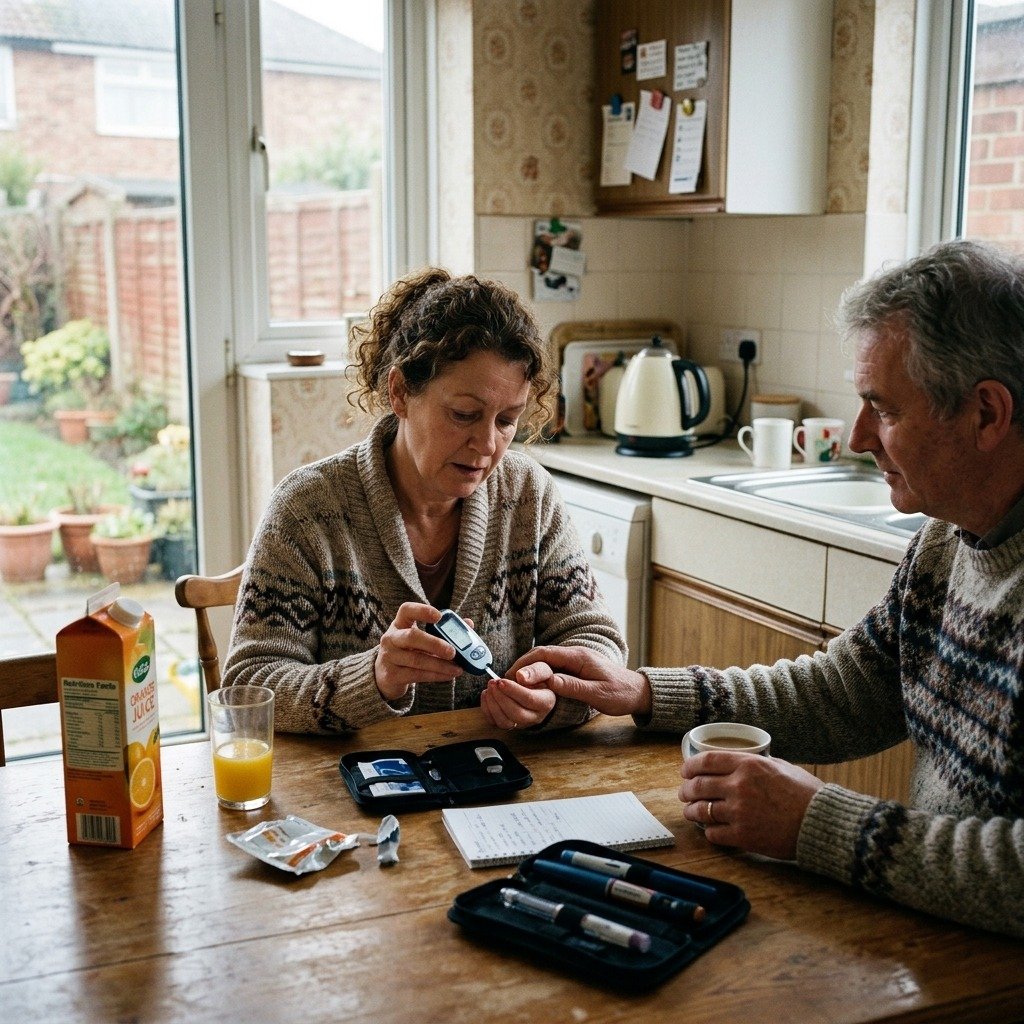
IAH is defined as the inability to recognise that blood glucose is falling due to the loss of warning symptoms such as sweating, tremor, and palpitations. A person with IAH cannot self-rescue from a hypo early. They rely on a family member, carer, or device alert to intervene before the hypo becomes severe.
Nocturnal hypoglycemia and night supervision
Nocturnal hypos are particularly dangerous because the person is unconscious and cannot self-treat. A partner or family member who regularly checks glucose overnight, responds to CGM alerts, or wakes the person to treat a hypo is providing a genuine supervision need potentially qualifying for the higher rate of AA (£114.60/week in 2026/27) if both day and night needs are present.
Emergency glucagon administration
A family member trained to administer emergency glucagon (Glucagen, Baqsimi nasal powder, or Zegalogue) is providing a care need that goes beyond simple companionship. Document who administers it, how often severe hypos occur, and whether A&E attendance has been required.
DVLA implications of severe hypoglycemia
Per DVLA guidance (updated November 2025 and reflected in April 2026 clinical guidance): a severe hypo is defined as one requiring the assistance of another person. Group 1 drivers who have had two or more severe hypos while awake within 12 months must stop driving and notify the DVLA. Group 2 (lorry/bus) drivers must stop after any single severe hypo, including during sleep. While DVLA licensing is a separate matter from AA, documentation of severe hypo history and its driving implications is relevant evidence of the supervision burden on the claimant’s household.
Diabetic Foot Care Requirements
Daily foot inspection requiring help
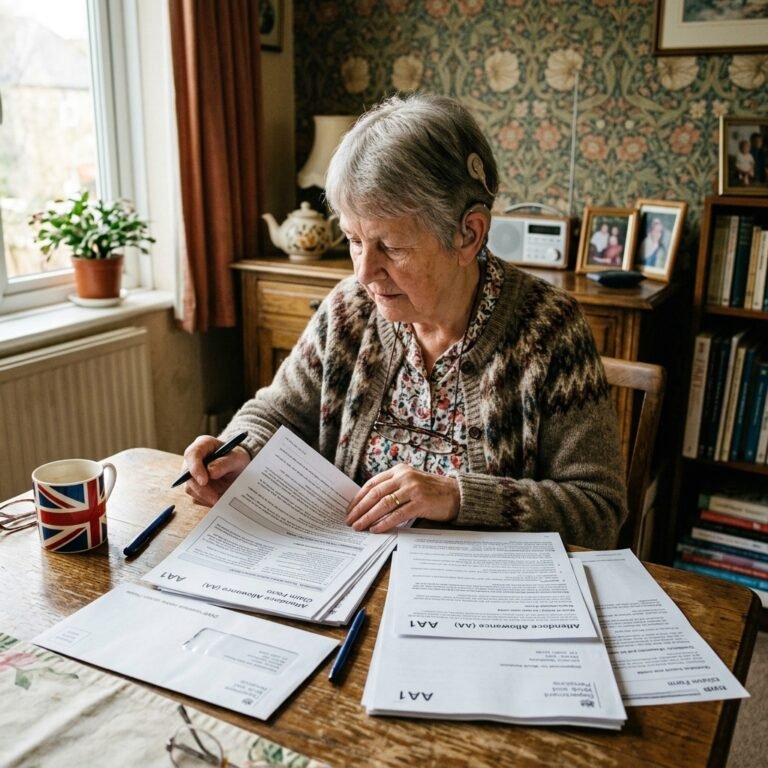
Where visual loss or reduced upper limb flexibility prevents self-inspection, daily foot checks require another person. On an AA1 form, this should be described specifically: “I cannot see my feet clearly due to diabetic macular oedema. My wife inspects both feet each morning, which takes approximately 10 minutes, to check for blisters, redness, or breaks in the skin.”
Nail cutting and podiatry access
People with diabetes at high or very high foot risk (NICE classification) should not cut their own toenails and require regular podiatry. Between appointments, a family member may need to monitor for ingrown nails or thickened nail edges. Note the frequency and who provides this.
Ulcer dressing changes at home
District nurse or self-managed dressing changes for active ulcers constitute a significant daily care burden. Describe the wound, the dressing type, how long changes take, and whether pain or restricted movement means another person must assist.
Bathing supervision with foot ulcers
Active ulcers or post-surgical wounds often require waterproofing, positioning assistance, or supervision during bathing to prevent wound contamination. This is a named personal care task and should be described explicitly.
Diabetic Nephropathy and Care Needs
Stage 4–5 CKD and fatigue
Advanced diabetic nephropathy (eGFR 15–29 for Stage 4, below 15 for Stage 5) produces profound fatigue, anaemia, and difficulty concentrating. This affects the ability to prepare meals, manage medications, and complete personal care tasks. Fatigue that extends tasks significantly or requires prompting counts the DWP recognises that needing extra time or assistance due to exhaustion is a care need.
Fluid restriction and dietary supervision
Renal patients on fluid restriction and low-potassium diets may require assistance with meal preparation to avoid unsafe food choices, particularly where cognitive function is reduced by uraemia or where sight loss makes label-reading difficult. For dialysis-related care needs, see our [Attendance Allowance for kidney disease page].
Diabetic Cardiovascular Disease
MI history, PAD, and mobility
Post-MI fatigue and breathlessness can limit the ability to perform personal care tasks independently. Peripheral arterial disease (PAD) causes ischaemic pain at rest or on walking, limiting the person’s ability to move around the home, prepare food, or attend the toilet without assistance.
Amputation and adapted care needs
Lower limb amputation a complication of severe diabetic foot disease or PAD creates substantial personal care needs around dressing, prosthesis fitting, transfers, and mobility. These needs are typically significant and often qualify for the higher rate.
Stroke as a diabetes complication
Stroke doubles the functional care needs across almost every personal care domain. If a person’s stroke was caused or worsened by poorly controlled diabetes, both conditions should be listed on the AA1 form. The functional impact of each should be described separately.
Insulin Management Care Needs
Insulin injection difficulty with neuropathy or arthritis
Painful peripheral neuropathy or coexisting rheumatoid arthritis can make drawing up insulin, operating pen devices, or rotating injection sites difficult or impossible without assistance. Describe grip strength, dexterity, and any tremor.
Insulin pump and CGM supervision
Insulin pump users may require assistance with infusion set changes, troubleshooting occlusion alarms, or interpreting CGM trend data particularly where cognitive impairment, visual loss, or dexterity problems are present. As of November 2025, the DVLA also permits Group 2 drivers to use CGM for monitoring purposes (bringing them in line with Group 1 drivers, who have been permitted this since 2018), which reflects the mainstream clinical role CGM now plays in diabetes management.
Cognitive impairment and dose calculation
Older adults with diabetes and comorbid dementia or mild cognitive impairment frequently require prompting or supervision to take insulin at the correct dose and time. This supervision need ensuring medication is taken safely is a legitimate daytime care need.
Weak vs Strong Diabetes AA1 Wording
| Care Need | Weak Wording | Strong Wording |
| Nocturnal hypo unawareness | “I sometimes have low blood sugar at night” | “I have impaired hypoglycemia awareness. My husband wakes twice nightly to check my CGM readings and has administered nasal glucagon on three occasions in the past six months” |
| Foot inspection with retinopathy | “I check my feet when I can” | “Due to diabetic macular oedema I cannot see below knee level clearly. My daughter inspects both feet for 10 minutes each morning before I dress” |
| Insulin injection with tremor | “I find injections difficult” | “Essential tremor alongside peripheral neuropathy means I cannot reliably draw up the correct insulin dose. My carer prepares and administers all four daily injections” |
| Meal timing with insulin | “I need to eat on time” | “Rapid-acting insulin must be taken within 15 minutes of eating. When fatigue prevents me from preparing food promptly I am at risk of a severe hypo. My wife prepares all meals and times them to my injections” |
| Hypo: urgent food access | “I need snacks nearby” | “During a hypo I cannot safely open packaging or pour liquids. My partner must provide and administer fast-acting glucose within minutes or I lose consciousness” |
| Blood glucose testing | “I test my blood sugar” | “Reduced fingertip sensation from neuropathy means I cannot reliably obtain a blood sample. My carer performs fingerprick testing four times daily” |
| Dietary prep with visual loss | “I struggle to cook” | “Proliferative retinopathy means I cannot safely use a hob or read food labels. All meals are prepared by my daughter, taking approximately 45 minutes each day” |
| Ulcer dressing changes | “I have a wound on my foot” | “A Grade 3 plantar ulcer requires twice-daily saline irrigation and dressing by the district nurse and my wife. Each dressing change takes 20 minutes” |
| Mobility with neuropathy | “Walking is hard” | “Motor neuropathy causes foot drop and I cannot safely descend stairs without someone holding my arm. My husband assists me on all stair use approximately six times daily” |
| Night sweats and hypoglycemia | “I sweat at night” | “Nocturnal hypoglycemia causes drenching sweats requiring a linen change approximately three nights per week. My wife changes the bedding and monitors me until glucose is above 5 mmol/L” |
| Polypharmacy medication management | “I take a lot of tablets” | “I take 14 daily medications including insulin and anticoagulants. Cognitive slowing from uraemia means I require daily prompting and supervision to take the correct dose at the correct time” |
| Charcot foot and footwear | “I wear special shoes” | “Acute Charcot neuroarthropathy of the right midfoot requires a total contact cast. I cannot apply the cast independently and require 20 minutes of assistance to dress the affected limb each morning” |
Type 1 vs Type 2 for AA Purposes
Type 1 long-duration complications
People who have lived with Type 1 diabetes for 20 or more years carry the highest risk of accumulated complications retinopathy, nephropathy, neuropathy, and cardiovascular disease often in combination. Multiple overlapping complications strengthen an AA claim, as each contributes to different personal care tasks.
Type 2 with late-onset insulin requirements
Type 2 diabetes is progressive. Many people reach insulin dependency after years of oral therapy, bringing with it all of the injection-related care needs and hypoglycemia risks described above. Late-onset insulin dependence in an older adult often coincides with other age-related limitations (arthritis, cognitive decline) that compound the care burden.
LADA (Latent Autoimmune Diabetes in Adults)
LADA is often misclassified as Type 2 at diagnosis. People with LADA typically progress to insulin dependence within a few years and face the same hypo risks as Type 1. If the AA1 asks for the type of diabetes, state “LADA (Latent Autoimmune Diabetes in Adults) now fully insulin-dependent” to avoid the DWP underestimating the severity.
Steroid-induced diabetes in older adults
Older people taking long-term corticosteroids for conditions such as COPD, polymyalgia rheumatica, or inflammatory arthritis frequently develop steroid-induced diabetes. Blood glucose levels are often very high in the afternoon and evening (matching the steroid dose timing) and may require insulin. Steroid-induced diabetes should be described alongside the underlying condition that necessitates the steroids.
Evidence to Strengthen a Diabetes AA Claim
- Diabetes clinic letters including HbA1c, current medications, and a complications summary
- Ophthalmology reports documenting retinopathy grading and visual field results
- Podiatry reports with foot risk classification (NICE low/moderate/high/very high risk)
- Renal clinic letters showing eGFR staging and whether dialysis is planned or ongoing
- Diabetes specialist nurse (DSN) letters confirming care needs or hypo history
- CGM reports (ambulatory glucose profiles) showing time below range and frequency of nocturnal hypoglycemia
- A&E attendance records for severe hypoglycemic episodes
The Higher-Rate Case for Diabetes
The higher rate (£114.60/week, 2026/27) requires care needs both day and night. For diabetes claimants, the most straightforward higher-rate cases are:
- Nocturnal hypoglycemia requiring overnight monitoring where a family member must remain alert or wake to check glucose levels or administer treatment
- Combined visual and neuropathic impairment where sight loss affects daytime task safety and neuropathic falls risk creates night-time supervision needs
- Advanced CKD with uraemic fatigue where weakness and confusion affect both daytime personal care and night-time safety
- Post-amputation care needs where transfers, prosthesis management, and wound care span day and night
Diabetes-Specific Pitfalls to Avoid
- Focusing on HbA1c a good HbA1c does not mean no care needs; the DWP assesses function, not blood test results
- Missing hypoglycemia unawareness as a supervision need this is one of the strongest diabetes-specific grounds and is frequently overlooked
- Not mentioning foot care daily foot inspection, dressing changes, and podiatry dependence are concrete care needs that are easy to describe and easy for a decision-maker to understand
- Downplaying visual complications even moderate retinopathy affecting the ability to read labels, check glucose readings, or draw up insulin correctly is relevant
- Assuming good control means no care need the care need exists because of the effort required to maintain that control, and because of what happens when control slips
Frequently Asked Questions
Does well-controlled diabetes qualify for Attendance Allowance?
Not on its own. The DWP assesses care needs, not diagnostic labels or blood test results. Well-controlled diabetes that creates no functional difficulty with personal care tasks will not qualify. However, well-controlled diabetes that requires significant daily supervision such as frequent insulin injections administered by a carer, or overnight hypo monitoring can qualify even if HbA1c is within range.
Do I need visual loss or neuropathy to qualify?
No but complications such as retinopathy, neuropathy, cardiovascular disease, or renal impairment are the most common routes to qualification. Impaired hypoglycemia awareness without any of these complications can also qualify, particularly for the higher rate where nocturnal supervision is needed.
What if my hypoglycemia awareness is fine?
If your hypo awareness is intact and your diabetes is managed without significant complications, the case for AA is weak. Focus instead on any difficulties with injection technique, meal preparation, foot care, or other personal care tasks and consider whether any coexisting conditions also contribute.
Does using a CGM strengthen or weaken my diabetes AA claim?
It strengthens it if the data shows frequent or severe hypoglycemia, particularly at night. CGM ambulatory glucose profiles showing significant time below 3.9 mmol/L, nocturnal dips, or episodes requiring treatment are useful evidence. Using CGM does not suggest your diabetes is well-managed to the DWP it documents the underlying instability.
Can I claim Attendance Allowance for Type 2 diabetes without insulin?
Yes, but the care needs must still be present and significant. Type 2 without insulin or high-risk oral agents carries a lower hypo risk, so the claim will rest more heavily on complications. Retinopathy, neuropathy, cardiovascular disease, and renal impairment are all possible even in Type 2 without insulin.
What if I’ve had a diabetic ulcer or amputation?
Both create strong AA claims. Active ulcers require daily dressing changes and foot inspection concrete, time-limited care needs. Amputation creates ongoing care needs around prosthesis management, transfers, and mobility that typically qualify for the higher rate.
Does insulin pump therapy affect my Attendance Allowance claim?
Insulin pump use does not disqualify a claim. Pump management changing infusion sets, troubleshooting occlusions, interpreting CGM data can itself be a care need if the person requires assistance due to dexterity problems, visual loss, or cognitive difficulty. A pump demonstrates intensive diabetes management and is consistent with a complex, high-care-needs condition.
Can I claim Attendance Allowance for steroid-induced diabetes?
Yes. Steroid-induced diabetes creates the same care needs as any other form of insulin-requiring diabetes injection administration, hypo risk, meal timing. State the steroid-induced diabetes explicitly on the AA1 form, alongside the underlying condition requiring steroids, and describe the functional impact of both conditions combined.